
If your toilet won't flush but not clogged is the exact problem you're staring at, the bowl is clear and nothing is backed up, yet the flush just won't complete. In almost every case, the real issue is sitting inside the tank, not down in the drain line. One lid-off test flush will usually point you straight to the failing part, before you spend a dime on a plumber.
This matters more for homes around Paulden, AZ than it does elsewhere. Many properties here run on private wells with naturally hard, mineral-heavy water, and that changes which parts fail first and how often.
Why Your Toilet Won't Flush When There's No Clog
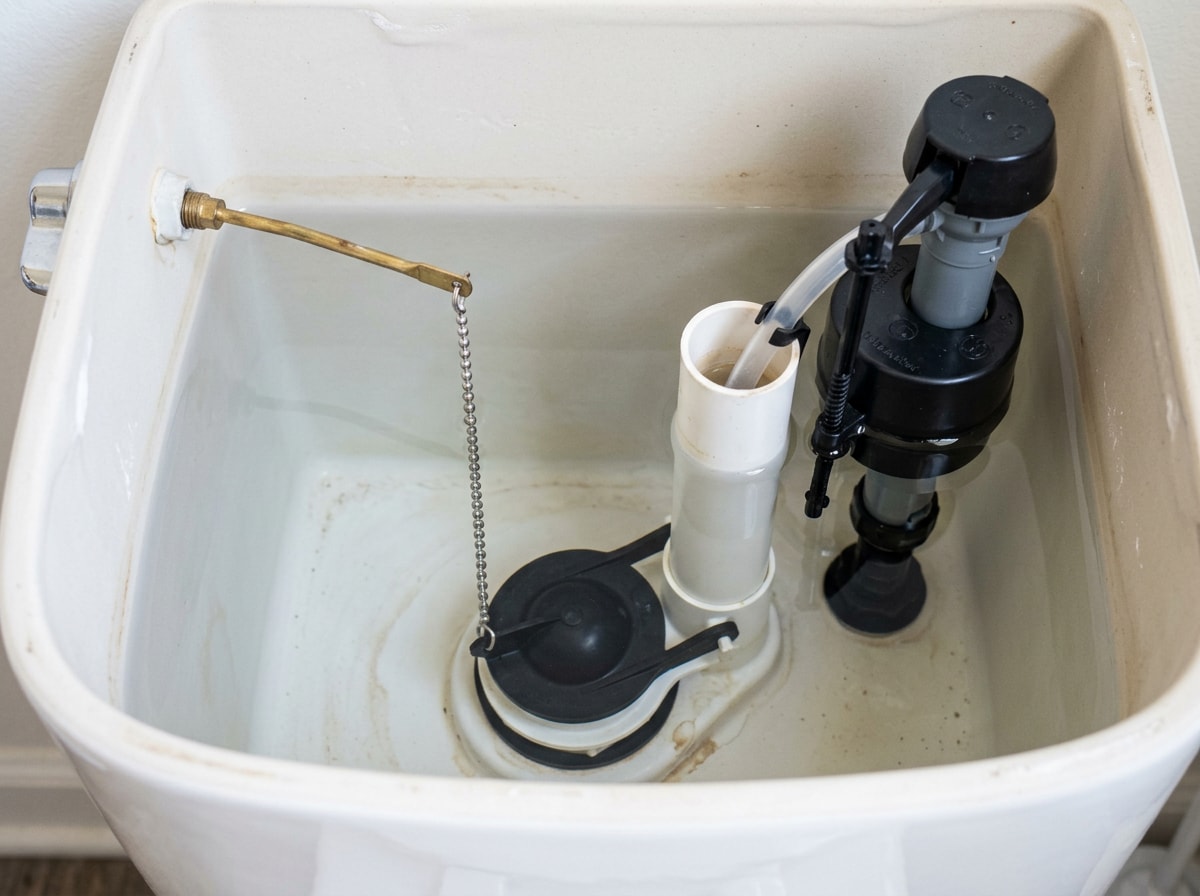
Every flush follows the same mechanical sequence. You press the handle, which pulls a chain, which lifts the flapper off the flush valve seat. Water stored in the tank drops into the bowl fast enough to trigger a siphon that pulls waste through the trap, and none of that requires the drain to be anything but clean.
If any single link in that chain fails, the flush stalls even though the pipes downstream are fine. Two broad failure zones cause this: something inside the tank isn't moving correctly, or the tank isn't getting enough water to begin with. Nearly every fix below falls into one of those two categories.
Quick Diagnosis: Watch One Test Flush
Lift the tank lid and press the handle while watching what happens inside.
- No movement at all — broken handle or disconnected chain.
- Weak trickle — low tank water or dirty rim jets.
- Water rises instead of draining — vent or line problem, not the tank.
- Toilet runs or trickles between flushes — worn or warped flapper.
This is a triage step, not a final diagnosis. It just narrows down which section below applies to your toilet. For a deeper look at flush valve components specifically, our guide on toilet flush valve problems covers cracked seats and warped seals in more detail.
Low Water Level in the Tank
A correctly filled tank sits about an inch below the top of the overflow tube. Water any lower than that doesn't give the bowl enough volume to create a full siphon, so the flush looks weak or doesn't finish.
Three things usually cause this:
- The supply valve behind the toilet got bumped partially closed.
- The fill valve has worn out and can't refill the tank properly.
- The float is set too low and shuts the fill valve off early.
Start with the easiest fix: turn the supply valve fully counterclockwise. If the tank still doesn't refill to the correct line, adjust the float upward or replace the fill valve. Most hardware stores carry universal kits that fit a wide range of toilets.
Broken or Detached Lever / Loose Lift Chain
Sometimes the handle moves freely but nothing happens inside the tank. That usually means the lift chain has come unhooked from the flapper, so pressing the handle isn't pulling anything at all.
Chain length matters too. Too much slack and the flapper barely lifts before dropping back; too little and it can't lift, or gets held open and causes a running toilet. The fix takes under five minutes: reattach the chain to the flapper's tab, then adjust the clip so about half an inch of slack remains when the handle sits at rest.
The Flapper Valve Is Worn or Warped
A toilet that randomly runs or hisses even when no one has touched it almost always has a worn or warped flapper. Rubber degrades with age, and mineral deposits from hard water can stiffen the seal so it no longer sits flat over the flush valve opening.
Replacing a flapper is one of the more approachable repairs in the house. Shut off the supply valve, flush to drain most of the tank, unhook the old flapper, and snap in a new one sized to match your flush valve opening. Budget 15 to 20 minutes including a test flush.
Not all flappers hold up the same way in Paulden's water conditions:
| Flapper Type | Approx. Cost | Best For | Trade-off |
|---|---|---|---|
| Universal rubber | $ | Most standard toilets | Degrades faster in hard water |
| Adjustable / float-style | $$ | Fine-tuning flush volume on low-flow toilets | Needs manual calibration |
| Foam / mineral-resistant | $$$ | Homes on hard well water | Higher upfront cost, holds a seal longer against scale |
No Water Supply or Faulty Fill Valve
Check the supply valve on the wall or floor behind the toilet first. It should be turned fully counterclockwise; if it's only partly open, the tank can't refill fast enough between flushes.
Next, run another faucet in the house. If nothing comes out there either, you're dealing with a whole-home water issue rather than a toilet problem, a common scenario for well systems during pump trouble. If water is available but the tank still won't fill, the fill valve may be failing. Symptoms include a tank that fills very slowly, doesn't fill at all, or shuts off before reaching the fill line. If you'd rather hand this off, our residential plumbing team can diagnose and replace fill valves on the same visit.
Clogged Rim Jets or Siphon Jet
Rim jets are the small holes under the bowl's rim, and the siphon jet sits at the bottom of the bowl; both direct water to create the pressure that pulls waste through the trap. Water described as "hard" contains high amounts of dissolved calcium and magnesium, and while it isn't a health risk, it can cause mineral buildup on plumbing fixtures . That buildup narrows rim and siphon jets over months or years until the flush loses most of its force.
In our service calls out toward Paulden and Big Chino Road, scale-choked rim jets are the single most common cause we find behind a "no-clog" flush failure, more often than a bad flapper. Almost all Northern Arizona groundwater is hard, with calcium bicarbonates as the primary constituent, and typical hardness ranges from about 7 grains per gallon up to 30 grains or more on some private wells, which accelerates jet clogging compared with softer municipal supplies.
Cleaning them yourself is usually straightforward: scrub visible rim holes with an old toothbrush and white vinegar, or pour a cup of vinegar into the overflow tube and let it sit for a few hours before flushing to dissolve deposits deeper inside.
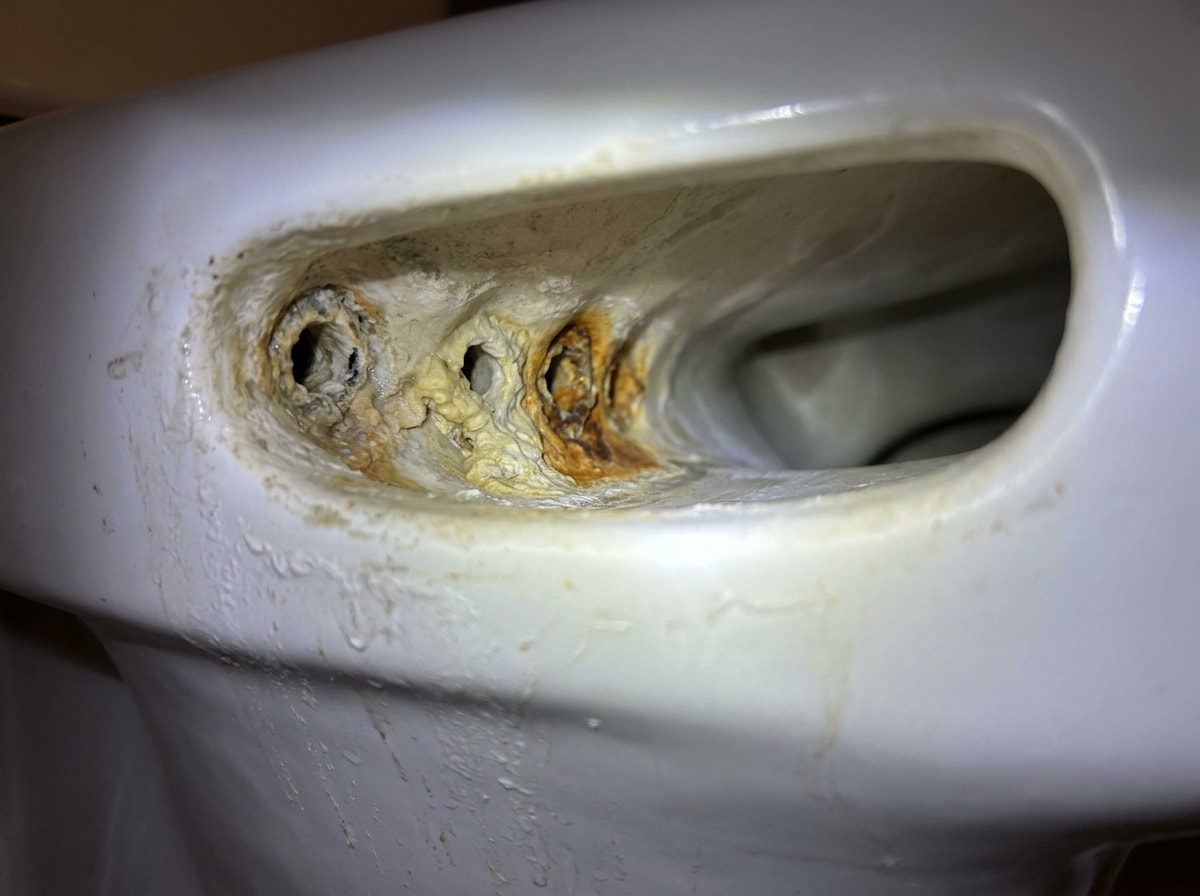
If scale keeps returning every few months, vinegar alone won't keep up. At that point, a whole-house water treatment setup addresses the mineral content at the source instead of just the symptom in one fixture.
Vent Pipe Blockage or Water Rising in the Bowl
Everything above assumes the flush mechanism itself is the problem. Water that rises in the bowl, gurgles, or drains slowly points somewhere else entirely, toward the venting system or a line issue, not the flapper or chain.
Watch for these signs:
- Gurgling from a nearby sink or tub when the toilet flushes.
- Water backing up into the tub or shower.
- A persistent sewer odor in the bathroom.
The vent system serving each building drain shall have not less than one vent pipe that extends to the outdoors , and that open path is what lets fixtures drain without creating a vacuum that traps water and waste. A blocked vent, often from debris, a bird's nest, or seasonal buildup, can make a toilet behave as if it's clogged even when the drain line itself is completely clear. A sewer inspection with a camera is usually the fastest way to confirm whether the vent or the line is the actual culprit.
When to Call a Plumber
Some situations call for a licensed plumber rather than another round of DIY fixes:
- More than one fixture in the house is affected at the same time, which points to a main sewer line problem.
- You've already replaced the flapper, chain, and fill valve, and the flush still fails.
- Water is backing up into other drains instead of going down.
A home contaminated with sewage can cause health risks for your family , so treat any backup or overflow as urgent rather than something to wait out. An older toilet that has gradually lost flush power despite clean rim jets and a good water level may simply need replacing.
If you're anywhere around Paulden and these steps haven't fixed the flush, get a free estimate and we'll get a licensed plumber out to diagnose it properly. You can also browse our full plumbing services lineup to see what else we handle on well-water properties in the area.
FAQ
Why won't my toilet flush but isn't clogged?
Most of the time, a toilet that won't flush but isn't clogged has a problem inside the tank, a detached or slack chain, a worn flapper that won't seal, a low water level, or a failing fill valve. The drain itself is almost always fine; the mechanism moving water into the bowl is what's failing.
Why is my toilet flushing weak but not clogged?
A weak flush that isn't caused by a clog usually comes down to one of two things: not enough water sitting in the tank, or rim jets restricted by mineral buildup. Check the tank water level first, then inspect the rim jets for scale if the water line looks correct.
How do you fix a toilet that won't flush but isn't clogged?
Work through the checks in order: confirm the tank water level, check the chain and flapper for slack or wear, clean the rim jets with vinegar if flow looks weak, and confirm the supply valve is fully open. Call a plumber if the flush still fails after these steps.
Why is my toilet overflowing but not clogged?
Overflowing is a different symptom than a toilet that won't flush at all, it means water is rising instead of draining. This usually points to a blocked plumbing vent or a line issue rather than anything in the tank, so it needs a different fix than the tank-mechanism causes above.
Does hard well water make this problem worse in Paulden?
Yes. Hard, mineral-rich well water narrows rim jets and stiffens flapper seals faster than treated municipal water, so homeowners on private wells tend to see this issue more often and need to clean or replace parts more frequently.