A shower drain install in Skull Valley, AZ is never just a drain swap. Pipe sizing, trap depth, drain layout, and septic tie-ins all determine whether a walk-in shower drains cleanly for the next twenty years or starts gurgling within six months. Here's what actually matters before the first cut goes into the subfloor.
Why Shower Drains Need a Full 2-Inch Line
A shower drain requires a full 2 inch drain pipe, while a standard tub drain only needs 1.5 inches.
Showers produce steady, higher volume flow with no basin to slow it down. The larger pipe keeps water moving instead of backing up at the strainer.
Reusing an old 1.5 inch tub line during a tub-to-shower conversion is one of the most common mistakes homeowners run into. It almost always causes slow draining, gurgling, or standing water at the pan. A proper swap means replacing the trap, trap arm, and often several feet of pipe, not just the drain cover.
Here's a wrinkle most guides skip: Arizona is mid-transition on its plumbing code. Most local jurisdictions, including unincorporated Yavapai County, still enforce code built on the 2018 International Plumbing Code (IPC 2018), with that adoption record verified as recently as August 2026 . But the state is adopting the 2024 I-Codes, including the 2024 edition of the International Plumbing Code, with an effective date of December 5, 2026 . If your install straddles that date, confirm which edition your inspector is enforcing before you finalize drain sizing and venting.
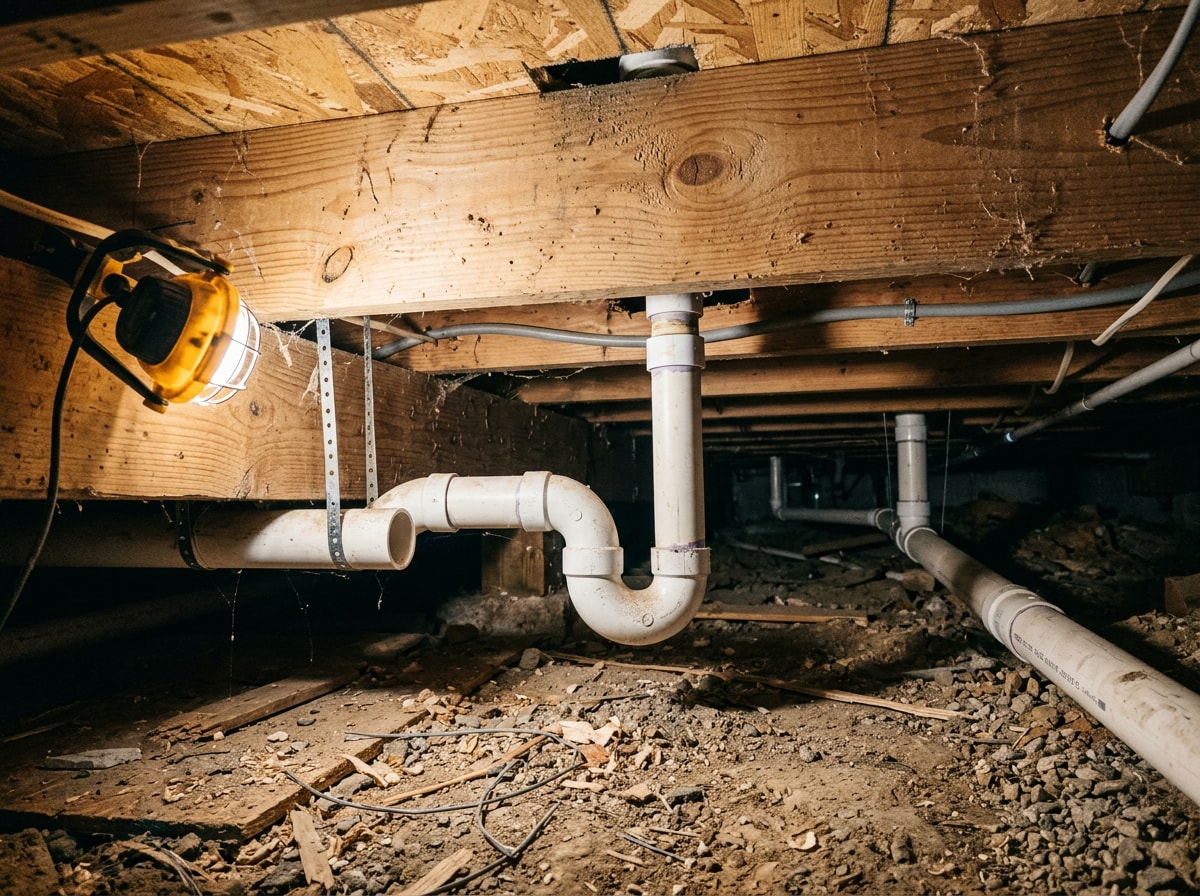
P-Trap Placement and Depth
Every shower trap holds a small reserve of water that blocks sewer gas from entering the bathroom. That's its entire job, and it only works if the water seal stays intact.
The P-trap should sit as close to directly beneath the drain outlet as the framing allows, with minimal horizontal offset in the trap arm. Standard depth below the finished floor typically runs a few inches, but actual clearance depends on joist spacing and the drain body chosen.
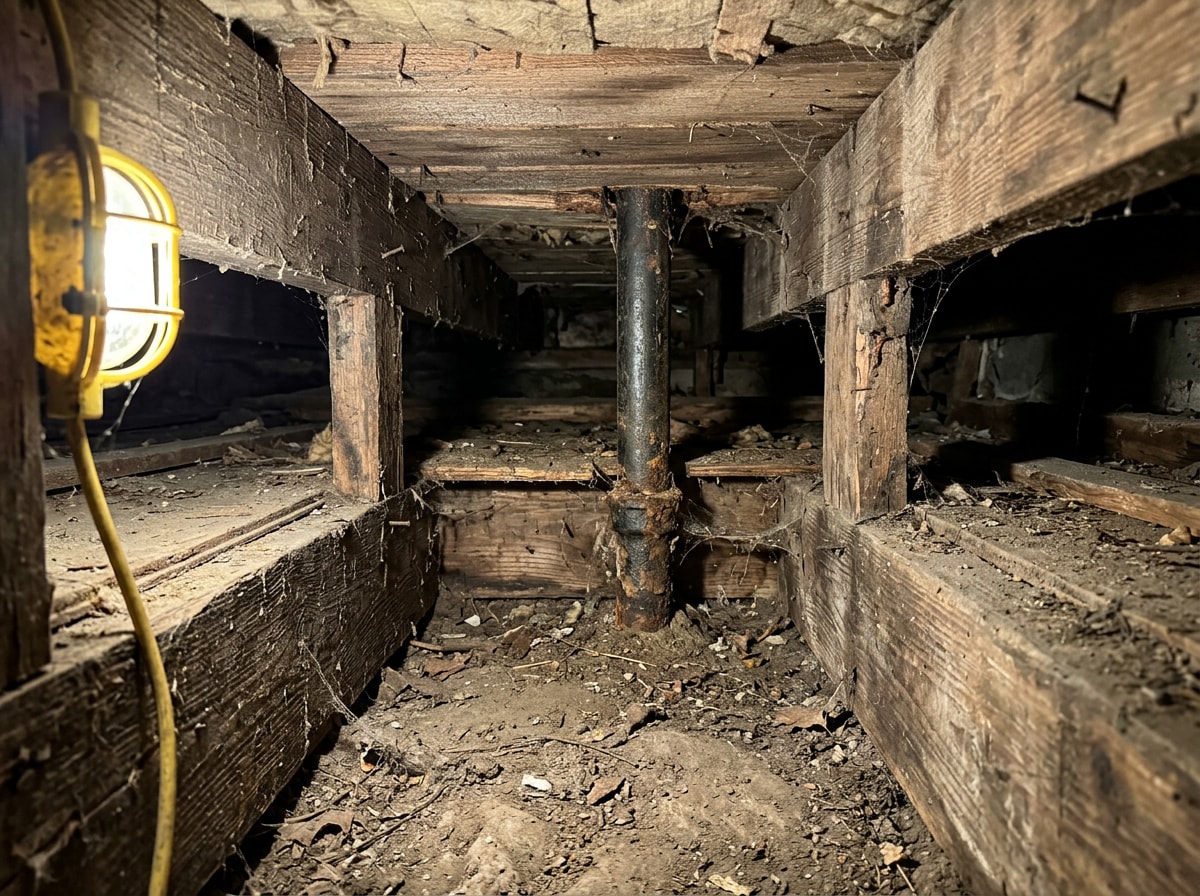
Tighter joist clearance in older homes can force creative routing. That's why a pre-install inspection matters more than guessing from a generic online diagram.
Center, Linear, or Offset: Picking a Drain Layout
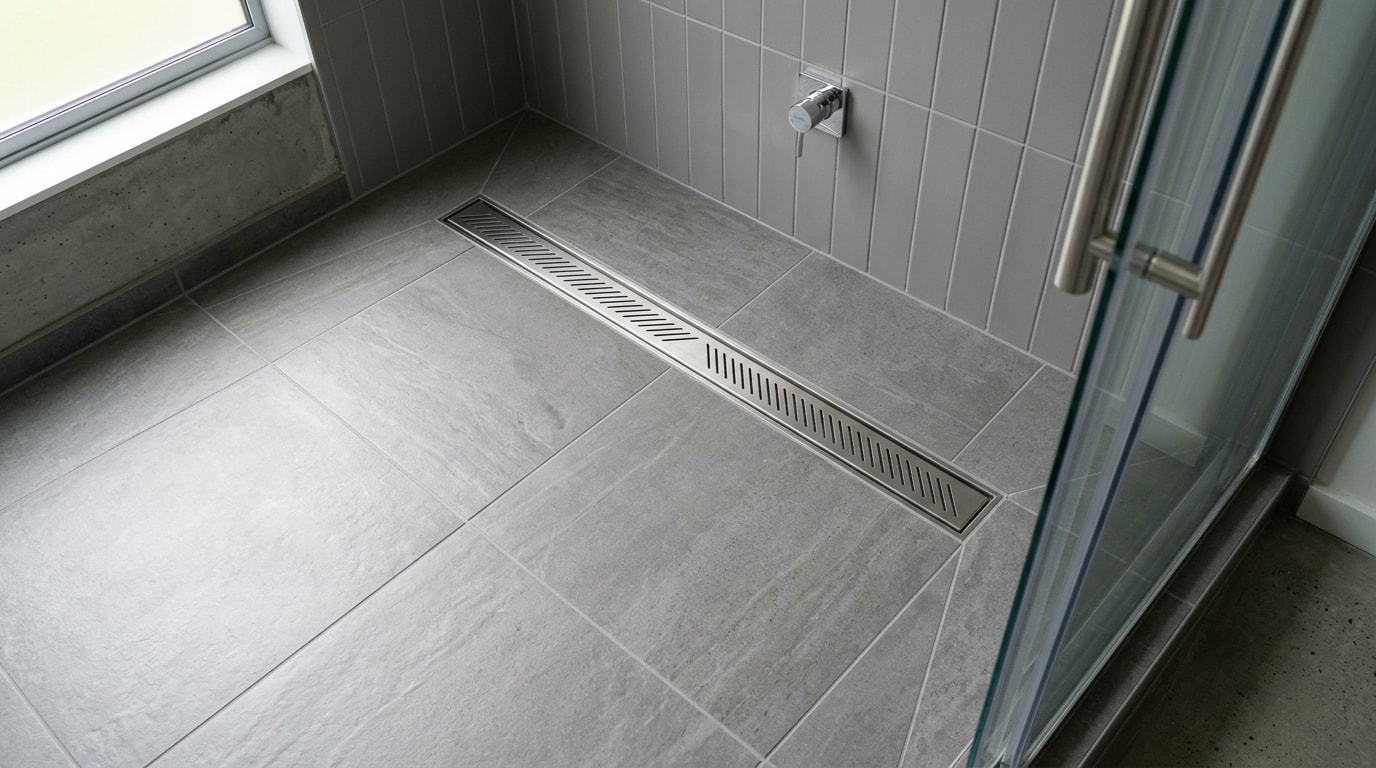
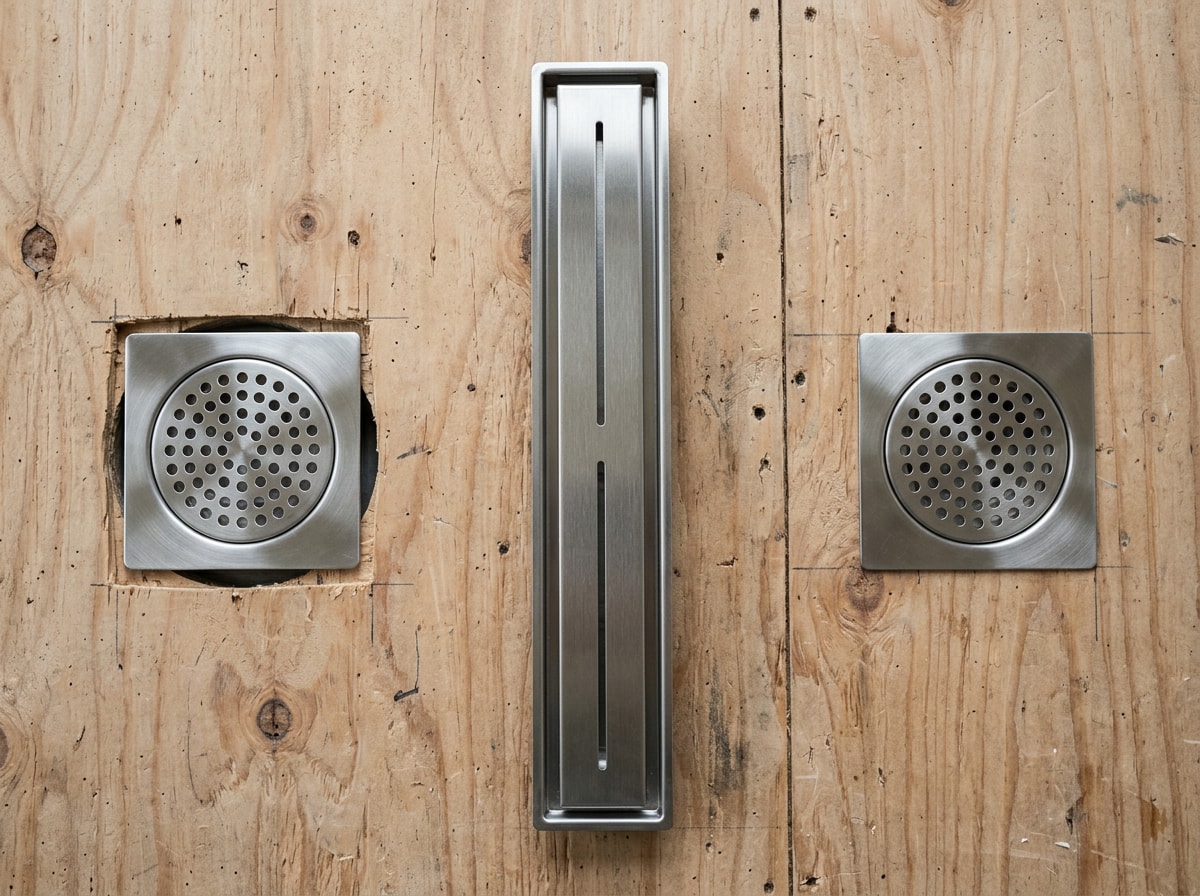
Walk-in showers generally use one of three drain layouts. Each one trades off vertical clearance against finish flexibility.
| Layout | Vertical Clearance Needed | Best Fit |
|---|---|---|
| Center (point) drain | Lowest, fits most joist bays with no modification | Older homes, tub-to-shower conversions, budget-friendly retrofits |
| Linear drain | Highest, longer drain body and channel need more depth | New construction, single-slope floors, large-format tile |
| Offset drain | Moderate, routes around an obstruction while keeping a standard body | Shower layouts with a joist or beam in the way |
A center drain is the easiest retrofit in older framing because it needs the least depth. A linear drain looks sleek and allows a single-slope floor, but its longer body often demands more vertical clearance than a center drain. An offset drain splits the difference, letting the plumber route around an obstruction while keeping a standard drain body.
In homes with shallow joist bays, layout choice alone can decide whether new framing work is needed at all.
Septic System or Sewer Line? Know Which One You Have
Before running new drain lines, confirm whether the home connects to a septic system or a sewer line. Most properties in this part of Yavapai County rely on septic.
A septic system works by holding wastewater in a buried tank long enough for solids to settle and scum to float, then releasing the clarified liquid into a drainfield where the soil finishes treatment. A typical septic system consists of a septic tank and a drainfield, with liquid effluent discharged from the tank into a series of perforated pipes buried in the drainfield area .
Adding a shower drain tie-in increases the continuous flow volume that tank and drainfield need to absorb alongside existing fixtures. Skipping this check can mean a shower that drains fine on day one but strains the system over time. If it's been a while since the tank was serviced, pair the install with a septic inspection so you're not finding out about a tired drainfield the hard way.
Permits, Older Homes, and Other Skull Valley Realities
Skull Valley is unincorporated, so plumbing permits for a shower drain install route through Yavapai County Development Services rather than a city building department. Septic work is permitted separately from the plumbing permit itself. That distinction trips up a lot of homeowners who assume one permit covers both.
The fees are public record. You must have a permit to construct a septic system, whether conventional or alternative, and your septic system construction will be inspected . For a residential system, application fees run $550 for residential work, $750 for commercial, or $320 for a tank-only or repair permit , plus a document fee. Budget for that separately from your plumbing permit.
The area's rural terrain and older ranch-style homes add another wrinkle. Many were framed decades before 2 inch shower drains became standard, leaving shallower joist bays and undersized legacy waste lines. A drain layout that works easily in new construction may need extra framing adjustments out here.
Our crews run into this constantly on service calls across Skull Valley, Kirkland, and the rest of rural Yavapai County. We've opened up more than one 1950s ranch floor expecting a straightforward swap and found a 1.5 inch cast-iron stub that had to come out entirely before a code-compliant shower drain could go in. If you want the visual walkthrough of slope, venting, and trap depth for these setups, our walk-in shower drain plumbing diagram guide breaks it down room by room.
What Affects Shower Drain Installation Costs in Skull Valley
Cost depends mainly on drain type, labor complexity, and whether septic work is involved.
- Drain type: A center drain in open floor framing costs less than a linear drain requiring new slope framing.
- Floor access: A slab floor requires concrete cutting, while a joist floor is usually faster to open and close.
- Permits: Plumbing permit fees are typically modest; septic permit fees run $320 to $750 depending on scope, as noted above.
- Travel and access: Rural Yavapai County jobs can run toward the higher end of local labor estimates once drive time and older-home access issues are factored in.
| Approach | What's Included | Trade-off |
|---|---|---|
| DIY, materials only | Drain kit, trap, pipe | No permit coverage, no warranty on workmanship, risk of code fail at inspection |
| Professional, labor included | Drain replacement, trap and line work, permit handling | Higher upfront cost, code-compliant install backed by a warranty |
The median annual wage for plumbers, pipefitters, and steamfitters was $63,800 in May 2025 , which is one reason labor rates have climbed nationally over the past few years. Rural service areas often sit above the median once travel and access are added in.
For a project-specific number, get a free estimate rather than guessing from a national average. You can also browse our drain repair services page for related work we handle on the same visit.
FAQ
Do I need a permit for a shower drain install in Skull Valley?
Yes. Because Skull Valley is unincorporated, the permit goes through Yavapai County Development Services rather than a city office. If the project touches the septic system, that's a separate permit with its own fee.
What size pipe does a shower drain need?
A full 2 inch drain pipe, minimum. A 1.5 inch tub drain line is undersized for shower flow and is one of the most common reasons a converted shower drains slowly.
How deep should a shower drain trap sit below the floor?
A standard point drain typically needs only a few inches of clearance. Linear drains usually need more, often 3 to 4 inches, because of their longer drain body and channel.
Can I install a shower drain myself?
Simple drain swaps on an existing layout are a reasonable DIY project for an experienced homeowner. Cutting subfloor, meeting slope tolerances, and passing inspection on a new layout or septic-connected line is where it's worth hiring a licensed plumber.
Does a shower drain need its own vent?
Yes. Every shower drain needs proper venting to keep the trap seal intact and let wastewater flow without gurgling or siphoning the trap dry.
How does a septic system handle a new shower drain?
A septic tank and drainfield are sized around expected household fixture load. Adding a shower increases continuous flow volume, so it's worth confirming the tank and drainfield can absorb the added load, especially in an older system that hasn't been inspected recently.
How much does a shower drain install cost in Skull Valley?
Cost depends on drain type, floor access, and whether septic work is involved. DIY materials run far less than a professional install, but a pro install includes permit handling and warrantied workmanship. Contact us for a free, project-specific estimate.
For homeowners anywhere in our Skull Valley service area, our team at Elsea Plumbing handles everything from the drain swap itself to the septic inspection that confirms your system can take it.