The shower drain pipe size Kirkland, AZ homes need is 2 inches for nearly every walk-in shower, with 1.5-inch pipe allowed only for a single low-flow head under 5.7 gallons per minute. Get the size wrong and you're looking at a slow drain, a failed inspection, or torn-out tile. Here's what Yavapai County's adopted plumbing code actually requires, and how to check what's already behind your wall.
Standard Shower Drain Pipe Size in Kirkland, AZ: 2 Inches vs. 1.5 Inches
A standard shower drain pipe size is 2 inches in diameter. Shower pans sit lower and flatter than tubs. Water has less room before it overflows. A 1.5-inch drain line, the kind commonly found under bathtubs, can't clear that volume fast enough for most shower setups.
Kirkland is unincorporated Yavapai County, so it falls under the county's adopted residential and plumbing codes rather than a city-specific ordinance. As of January 1, 2026, that means the 2024 International Residential Code and 2024 International Plumbing Code. Residential plans in Yavapai County must comply with the 2024 International Residential Code, while commercial plans fall under the 2024 International Plumbing Code. That's a newer code cycle than most of the shower-drain articles you'll find online, which still quote older editions.
What most of those articles also miss is that the code doesn't set one flat shower drain size. It ties trap size to total flow rate through the showerhead and any body sprays combined:
| Total shower flow rate | Minimum trap and drain size |
|---|---|
| 5.7 gpm and less | 1 1/2 inches |
| More than 5.7 up to 12.3 gpm | 2 inches |
| More than 12.3 up to 25.8 gpm | 3 inches |
| More than 25.8 up to 55.6 gpm | 4 inches |
These figures come straight from the fixture trap table that governs showers based on the total flow rate through showerheads and body sprays. In practice, a single standard showerhead rarely pushes past 5.7 gpm, which is why 1.5-inch pipe is technically legal for a basic single-head shower. But a two-head or body-spray system adds up fast, and that's where a 2-inch (or larger) drain becomes mandatory, not optional.
Federal rules keep most single showerheads well under that 5.7 gpm threshold anyway. The EPA's WaterSense Specification for Showerheads, released in 2010, set a maximum flow rate of 2.0 gpm for labeled models , and the federal cap for any showerhead sold today sits at 2.5 gpm. Stack two or three heads together, though, and you cross into 2-inch or 3-inch territory quickly.
For most remodels, licensed plumbers default to 2-inch pipe across the board anyway, since it covers every flow scenario and rarely causes a problem at resale inspection. If you're not sure which tier your layout lands in, our team at Elsea Plumbing can confirm it before you tile. Get a free estimate and we'll check the math for you.
Shower Drain Dimensions: Body, Grate, and Trap
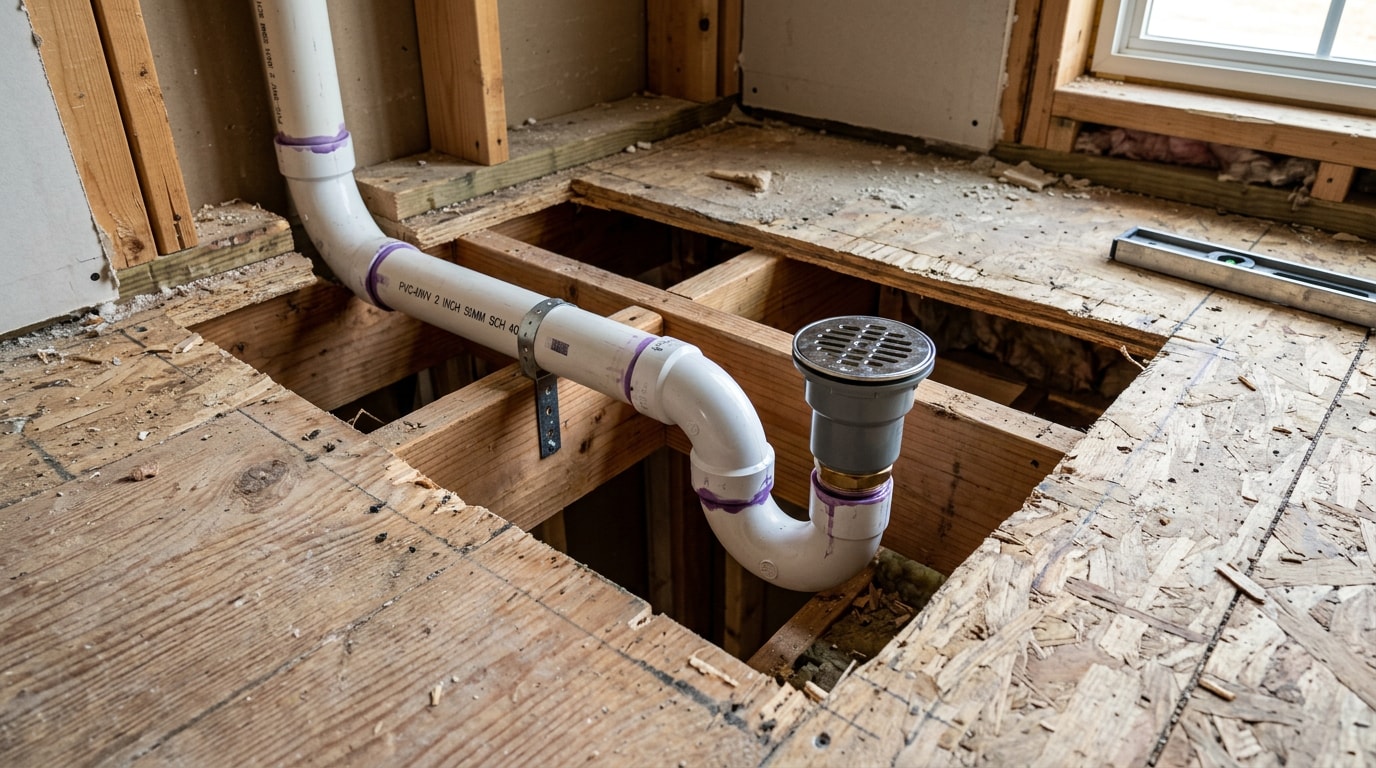
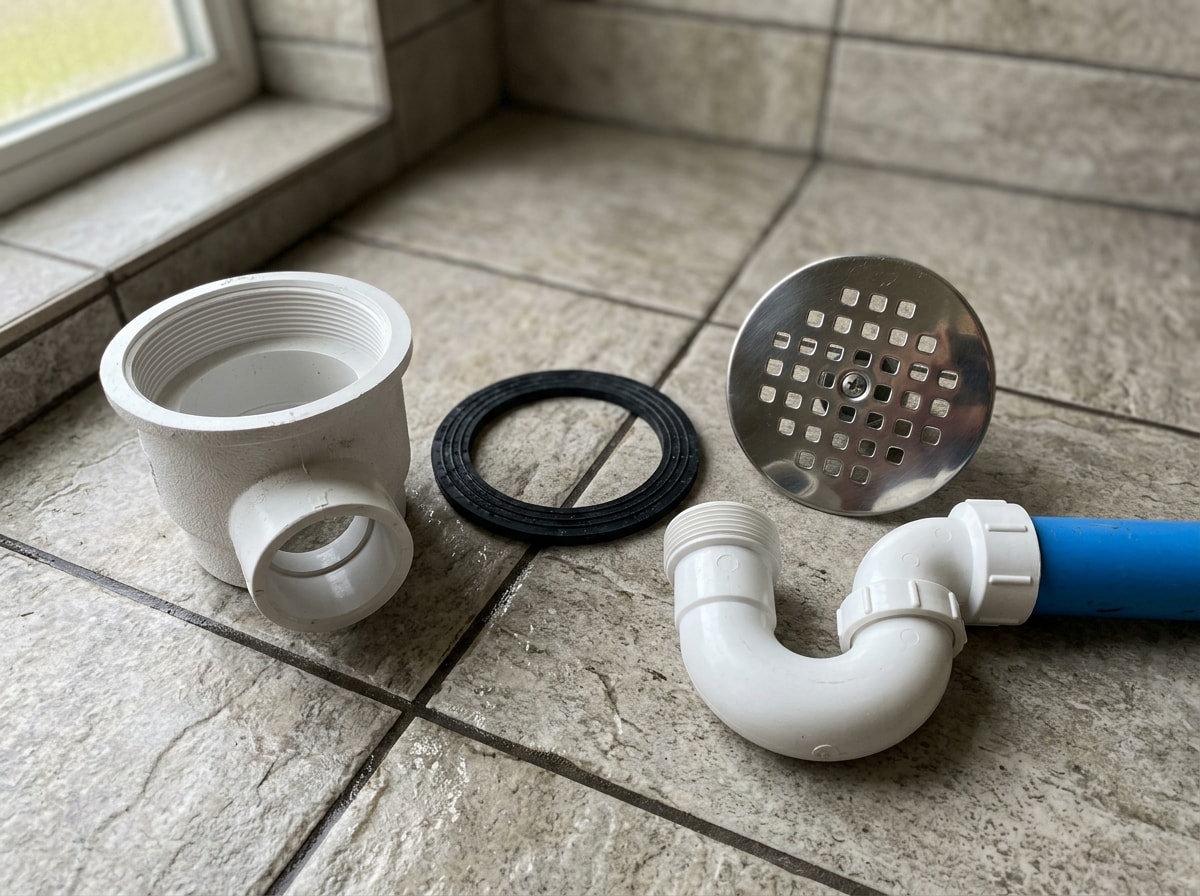
A complete shower drain assembly has three main parts, and all three need to match the pipe's inside diameter:
- Drain body – the fitting set into the shower floor that connects to the waste pipe below.
- Grate or strainer – the visible cover that catches hair and debris before water enters the pipe.
- Trap – the curved section that holds a water seal and blocks sewer gas.
Most shower drain kits sold today come pre-matched to 2-inch pipe, which simplifies installation. Instead of hunting for compatible parts separately, you install one coordinated kit sized correctly for the pipe behind your wall. Our shower drain installation guide for Skull Valley homeowners walks through that process step by step if you're starting from scratch.
Shower Drain Pipe Slope Requirements
Pipe diameter only works if the slope is right. Standard practice calls for 1/4 inch of fall per foot of horizontal shower drain pipe. That keeps water moving by gravity without draining so fast that it siphons the trap dry.
Some plumbers work within a slightly wider window, roughly 1/8 to 1/4 inch per foot, depending on the length of the run and the distance to the main stack. Longer runs sometimes need a shallower pitch to avoid outrunning the trap's water seal or creating venting problems. Drain pipe pitch deserves as much attention as pipe diameter during planning. If you're dealing with a drain that already gurgles or drains slowly, our drain repair services page covers how we diagnose slope and venting issues on-site.
Checking Your Existing Shower Pipe Size
Measure your shower drain pipe before any remodel or repair instead of guessing. Here's how:
- Look for size markings printed directly on the pipe near a fitting. Most PVC and ABS pipe has small embossed or ink-stamped numbers.
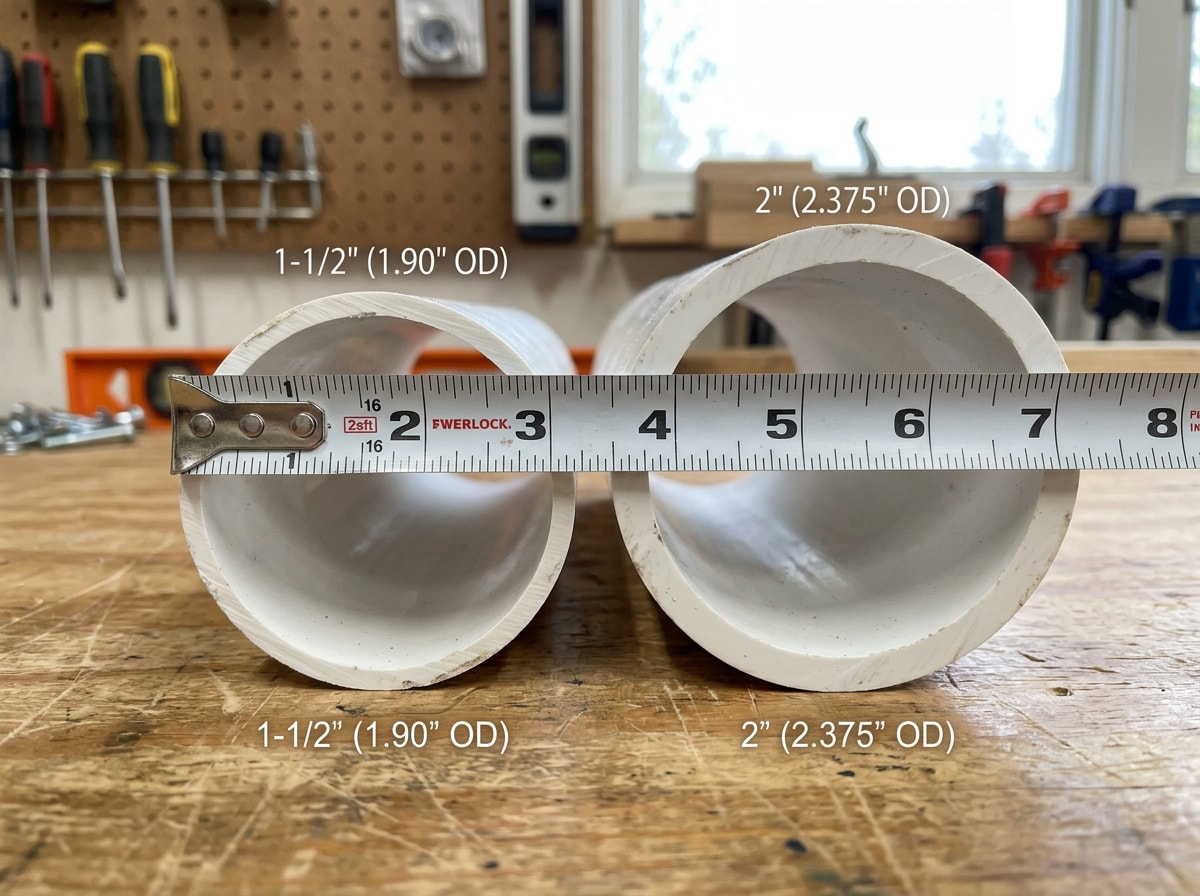
- If markings have worn off, measure the outside diameter instead.
- A nominal 2-inch Schedule 40 pipe measures about 2 3/8 inches across.
- A nominal 1.5-inch pipe measures about 1.9 inches across.
Knowing your existing pipe size before planning a replacement keeps you from ordering the wrong fittings or drain kit.
Tub-to-Shower Conversions: Can You Use a 2-Inch Pipe for a Tub?
Older tubs are almost always plumbed with 1.5-inch drain lines. Converting a tub into a walk-in shower typically means upsizing the drain pipe and trap to 2 inches to clear a single head safely, or larger if you're adding body sprays. Skipping that upgrade is one of the most common mistakes in DIY tub-to-shower conversions.
The reverse question comes up too: can a 2-inch pipe handle a tub? Yes, and it's often preferable in tub-shower combos, since the larger diameter drains both fixtures faster and reduces standing water during shower use. If a conversion is on your radar, our residential plumbing services page covers what's involved beyond the drain itself.
Many homes around Kirkland also run on a private septic system rather than municipal sewer. If you're upsizing a drain line that eventually ties into a septic tank, it's worth having the whole run checked, not just the shower branch. Our septic system services team can confirm the tank and line can handle the added flow from a new shower setup.
What Happens If You Use the Wrong Shower Drain Pipe Size?
An undersized shower drain pipe shows up fast. Expect a slow shower drain, standing water pooling in the pan, gurgling sounds, and possible overflow during longer showers. It can also flag as a code violation during a home inspection or resale, which gets expensive to fix after tile and fixtures are already installed.
Worth noting: a correctly sized 2-inch pipe can still drain slowly. When that happens, the culprit is more often inadequate slope, a clog, or a venting problem than the pipe diameter itself. In our service calls around Kirkland, undersized 1.5-inch lines on multi-head showers are the single most common reason we get called out for a "slow shower drain" complaint, not pipe damage or tree roots.
FAQ
What is a standard shower drain size?
A standard shower drain size is 2 inches in diameter. A single low-flow showerhead under 5.7 gpm can legally use 1.5-inch pipe, but 2 inches is the more common field standard across new construction and remodels alike.
Can I use a 1.5-inch pipe for a shower drain?
Yes, for a single showerhead with a total flow rate of 5.7 gpm or less. Above that flow rate, code requires 2 inches, and multi-head systems above 12.3 gpm require 3 inches or more.
What is the standard P-trap size for a shower?
The P-trap must match the drain pipe size, which is set by total flow rate: 1.5 inches up to 5.7 gpm, 2 inches up to 12.3 gpm, 3 inches up to 25.8 gpm, and 4 inches above that.
Does a walk-in shower need a 3-inch drain?
Only if the combined flow from all showerheads and body sprays exceeds 12.3 gpm. A single standard showerhead walk-in shower almost always falls well under that threshold and uses a 2-inch drain.
Is the drain pipe size different for a bathtub-shower combo?
Not by default. A bathtub trap minimum is 1.5 inches regardless of whether a showerhead is attached. Many plumbers still upsize to 2 inches on combo units for faster draining, but it isn't always required by code.
Are all shower drain covers the same size?
No. Shower drain covers vary by the drain body and pipe diameter underneath them. A grate sized for a 2-inch drain body won't necessarily fit a 1.5-inch assembly, so covers aren't universally interchangeable.
What are the regulations regarding shower drain sizes?
Shower drain and trap size is regulated by the total flow rate through the showerhead and any body sprays, per the adopted residential and plumbing codes. Yavapai County, which covers Kirkland, currently enforces the 2024 editions of these codes.
If you're planning a remodel, conversion, or just need a second opinion on what's behind your wall, reach out to Elsea Plumbing before you buy parts. We'll confirm the right pipe, trap, and slope for your specific setup.