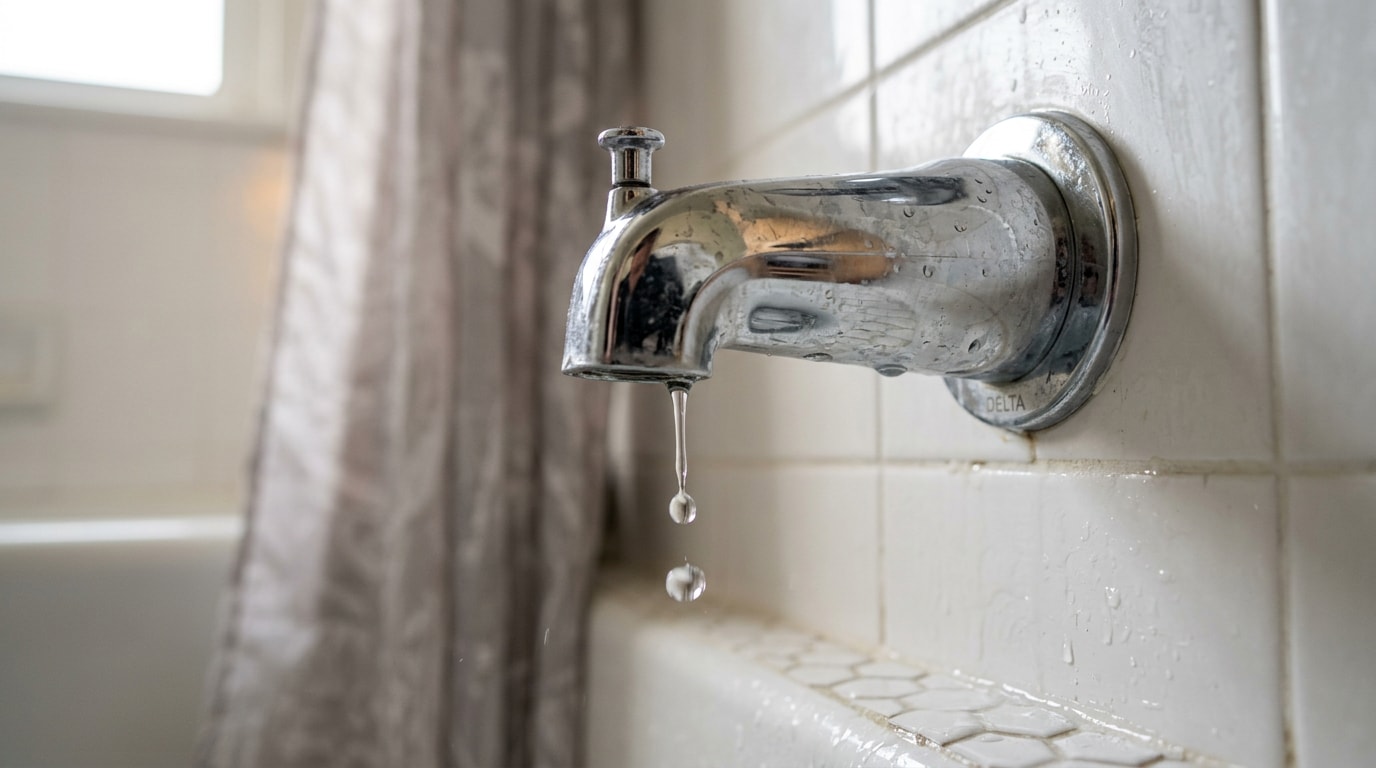
A leaking diverter in Dewey-Humboldt, AZ usually shows up as water trickling from the tub spout long after you've switched the flow to the showerhead. That drip wastes water, stains fixtures, and often points to a worn washer or a scaled-up valve rather than a true plumbing emergency. Here's how to tell what's actually failing, what repairs run in 2026, and when it's worth calling a plumber instead of guessing at parts.
What Is a Leak Diverter, and Where Is It Hiding?
A diverter is the small mechanism inside your tub-and-shower plumbing that redirects water flow, either up to the showerhead or down through the tub spout. It's not a separate fixture you can see on the wall. It's built into the tub spout itself, into a three-handle valve, or into a single-handle cartridge, depending on how your bathroom was plumbed.
When someone searches for a "leak diverter" problem, they're almost always describing one of these:
- Water still dribbling out of the tub spout while the shower is running
- A slow drip from the spout or wall handle after the water is shut off
- Reduced pressure at the showerhead that gets worse over time
Homeowners in older Dewey-Humboldt homes with three-handle tub-and-shower valves see this most often, since those setups have more moving parts that can wear out.
Signs Your Diverter Valve Is Leaking
Before assuming you need a full fixture replacement, check for these specific symptoms:
- Water from the tub spout during a shower — the most common complaint, caused by a worn gate or seal that no longer blocks flow to the spout.
- Dripping from the spout after the water is off — points to a failed washer, O-ring, or cracked valve seat.
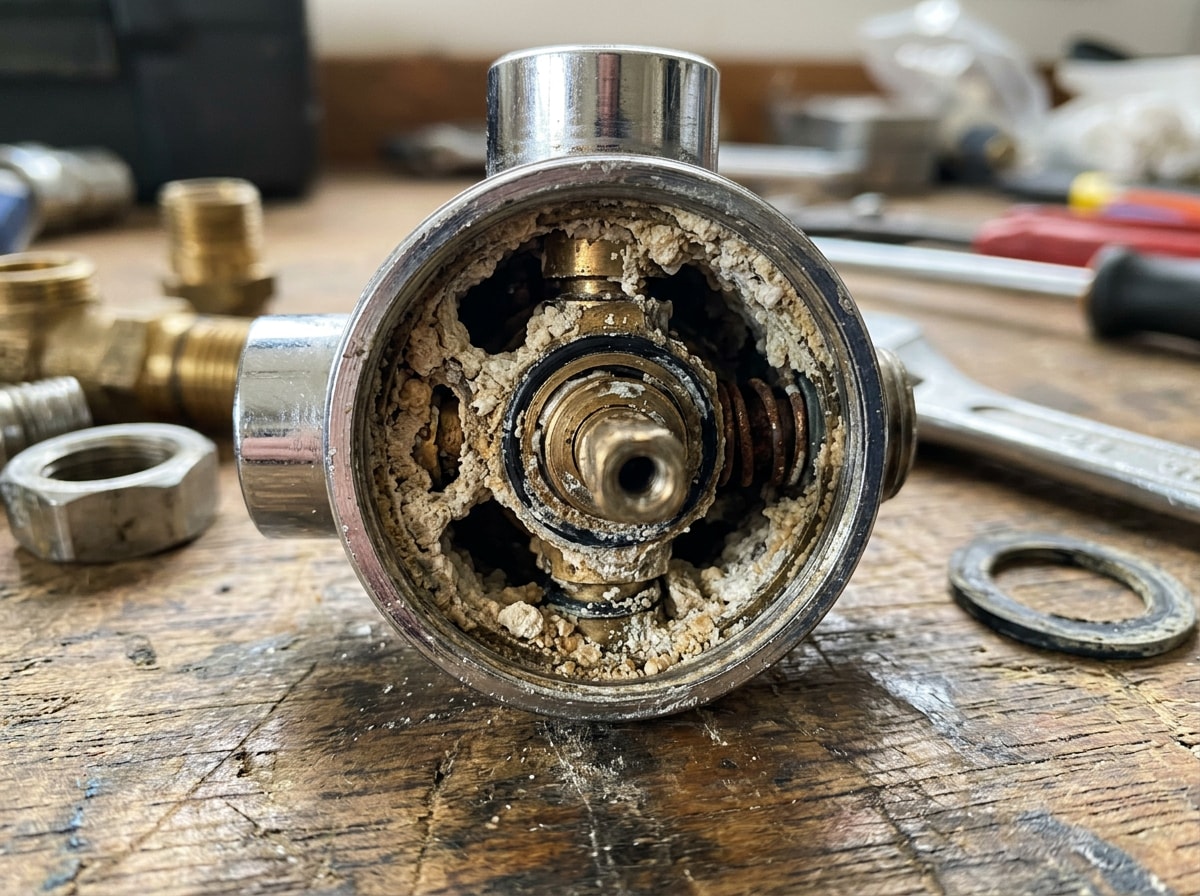
- Weak or sputtering shower pressure — often mineral scale restricting the diverter's internal passage rather than a leak at all.
- Water staining or mineral crust around the spout or handle — a sign the leak has been running long enough to leave deposits.
- A handle that feels loose, gritty, or hard to turn — usually mineral buildup inside the valve body.
Why Diverters Fail in Dewey-Humboldt Homes
Most diverter leaks trace back to one of three causes: a worn rubber washer or O-ring, mineral scale that keeps the gate or cartridge from sealing fully, or a cracked valve body from age or over-tightening. In the diverter repairs we run across Dewey-Humboldt and the surrounding Quad Cities, scale buildup is the repeat offender, especially in homes on well water where mineral content tends to run higher than treated municipal supply.
This is a water-efficiency issue, not just a nuisance drip. The current national plumbing standard sets an allowable leak rate of 0.1 gallons per minute for a bath and shower diverter when new, and 0.2 gpm after life-cycle testing.
Many older diverters installed in homes have much higher leak rates, with field studies showing rates averaging three to eight times what the current standard allows. On a well system, that extra draw shows up fast on a pump's duty cycle, not just a water bill.
Diverter Types: Which One Do You Have?
| Diverter Type | How It Works | Typical Failure | DIY Difficulty |
|---|---|---|---|
| Tub spout diverter | A pull-up gate inside the spout blocks flow, forcing water up to the showerhead | Worn gate seal, debris jammed in the gate | Easy to moderate |
| Three-handle valve diverter | A separate handle rotates a stem inside the wall to redirect flow | Worn washer, stem packing, or scaled valve seat | Moderate to difficult |
| Single-handle cartridge diverter | Flow direction is built into the cartridge along with temperature control | Worn cartridge seals, mineral-locked cartridge | Moderate |
DIY Fix or Call a Plumber?
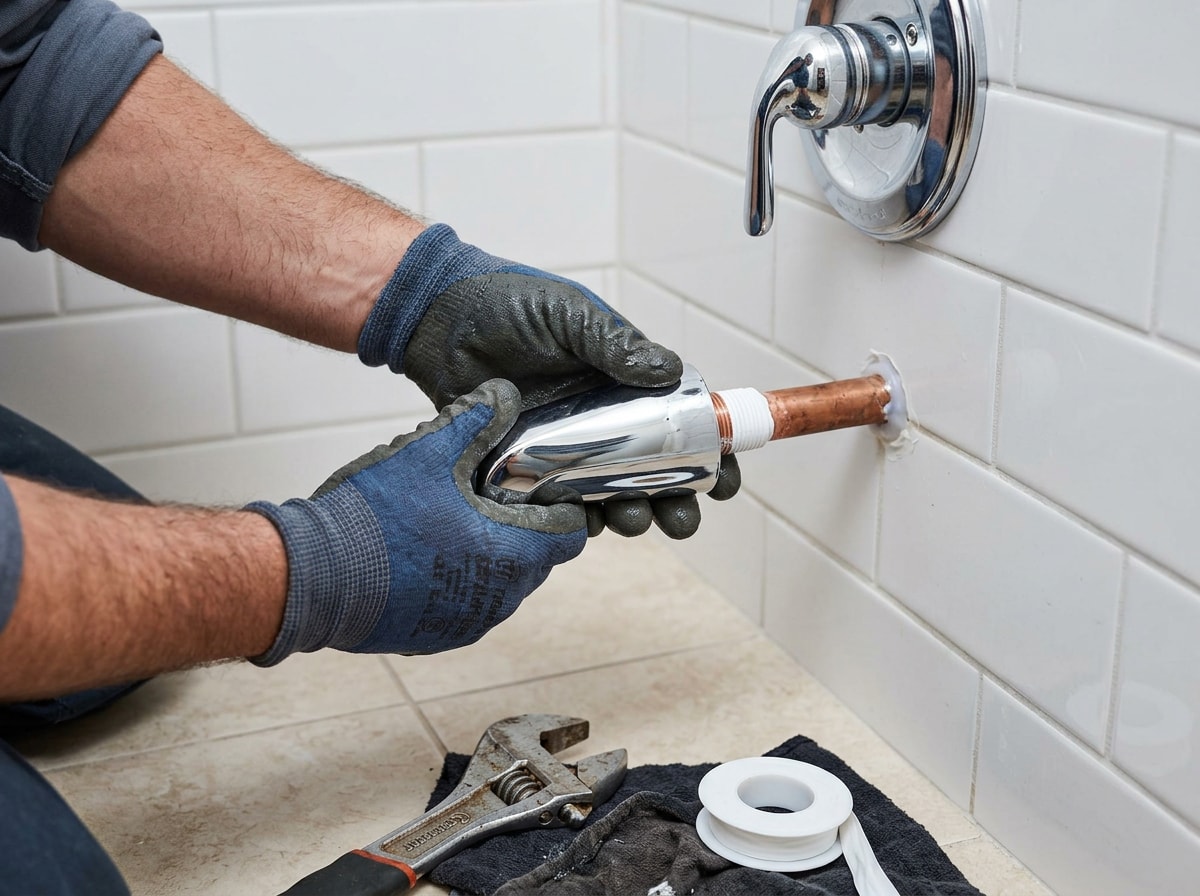
A leaking tub spout diverter is often a quick DIY job: unscrew the spout, check for a worn O-ring, clean out scale, and replace the spout if the internal gate is cracked. Most homeowners can do this with basic hand tools in under an hour.
A three-handle valve diverter is a different story. The stem lives inside the wall, and reaching it usually means pulling the handle, the escutcheon, and sometimes cutting into the wall if there's no access panel. If you're not confident shutting off water to the fixture or working with a stem wrench, this is where it's worth calling a plumber rather than risking a stripped stem or a cracked valve body.
A single-handle cartridge diverter sits in between. Replacement cartridges are inexpensive, but matching the correct cartridge to your specific faucet brand and model is where most DIY attempts stall out.
2026 Cost to Repair or Replace a Leaking Diverter
| Repair Type | Typical 2026 Cost | Notes |
|---|---|---|
| Tub spout replacement | $80–$180 | Parts plus labor; higher if the spout is soldered rather than slip-fit |
| Cartridge replacement | $150–$300 | Cost varies by brand; proprietary cartridges run higher |
| Three-handle stem/valve repair | $200–$450 | Higher if wall access requires cutting tile or drywall |
| Full valve body replacement | $350–$700+ | Needed when the valve body itself is cracked or corroded |
Costs climb when a technician has to open a wall to reach the valve, which is common in homes with tiled tub surrounds and no rear access panel.
The Hidden Cost: Water Waste From a Leaking Diverter
A dripping diverter rarely feels urgent, but the water adds up faster than most homeowners expect. Household leaks can waste nearly 1 trillion gallons of water annually nationwide , and a diverter that's stuck even partway open behaves like a continuous small leak every time the shower runs.
That waste matters more here than in most parts of the country. Yavapai County has seen Severe drought conditions expand in recent monitoring, even as other parts of the state saw some easing . On a private well, a leaking diverter isn't just a line item on a water bill. It's added wear on a pump that's already working against a tightening water supply.
How We Handle Diverter Repairs in Dewey-Humboldt
Most diverter calls start the same way: a homeowner notices water still running from the tub spout or a handle that's gotten hard to turn. We check the fixture type first, since a tub spout swap and a wall-mounted three-handle repair are genuinely different jobs with different costs. From there we test the actual leak, not just the symptom, so a scaled cartridge doesn't get treated like a cracked valve body.
This work falls under our residential plumbing services, and if the diverter issue turns out to be tied to a slower drain or an older supply line, we can address that in the same visit through our drain repair service. If you've already dealt with a related issue, our guide on bathroom sink leaking underneath in Dewey-Humboldt covers a similar diagnose-before-you-replace approach.
We serve homes throughout Dewey-Humboldt, AZ and the surrounding area, and you can see examples of completed work on our projects page. If the drip has been going on for more than a few weeks or the handle is getting harder to turn, get a free estimate before it turns into a wall repair instead of a valve repair.
FAQ
How do I know if my tub spout diverter is broken?
Run the shower and watch the tub spout. If water keeps coming out of the spout instead of fully redirecting to the showerhead, the diverter gate or seal has worn out. A quick visual check is usually enough to confirm it.
Can I fix a leaking diverter myself?
A tub spout diverter is often DIY-friendly: unscrew the old spout, inspect it, and replace it if the gate is worn. A three-handle valve diverter inside the wall is harder to access safely and is usually better left to a plumber, especially if you're not sure how to shut off water to that fixture.
Why does my shower lose pressure when the diverter leaks?
Mineral scale inside the diverter can partially block the passage to the showerhead at the same time it's letting water leak back out the spout. Fixing the leak often restores pressure, since the same buildup is usually causing both problems.
Is a leaking diverter valve an emergency?
No, in most cases it's a water-waste and fixture-wear issue rather than an emergency. It's worth fixing promptly, but it typically doesn't require after-hours emergency service unless the valve has cracked and is leaking into a wall.
Do I need to replace the whole faucet to fix a diverter?
Usually not. Tub spout diverters and cartridge diverters can be replaced individually without swapping the entire fixture. A full valve body replacement is only needed when the valve itself is cracked, corroded, or no longer holds a watertight seal.
This guide was reviewed by the licensed plumbing team at Elsea Plumbing, serving Dewey-Humboldt and the greater Prescott area.