Plumbing repiping in Dewey-Humboldt, AZ is usually the fix once rusty water, dropping pressure, and repeat pinhole leaks stop being occasional annoyances and start being a pattern. Many homes along the Agua Fria corridor were built with galvanized steel supply lines decades ago, and that pipe has a shelf life. This guide covers the warning signs, the repipe process itself, and what it takes to get it done right the first time.
Signs You Need Repiping in Dewey-Humboldt
Not every leak means a whole-house repipe. But a cluster of these symptoms together usually does.
Early, cosmetic signs often show up well before a system fails outright:
- Slightly discolored or metallic-tasting water
- Minor staining around fittings or valves
- Occasional banging or ticking noise when a fixture turns on
Structural, more urgent signs mean the pipe material itself is failing:
- Low water pressure at multiple fixtures across the house, not just one
- Visible green or white corrosion stains on pipes or around fittings
- Soft spots or water stains on walls and ceilings
- The same section of pipe leaking more than once
That last point matters more than it sounds like it should. Picture a homeowner who patches a pinhole leak behind a bathroom wall, only to find a new leak in that same wall cavity eight months later. That's not bad luck. It's a sign the corroded pipe feeding that whole section needs replacing, not another spot repair.
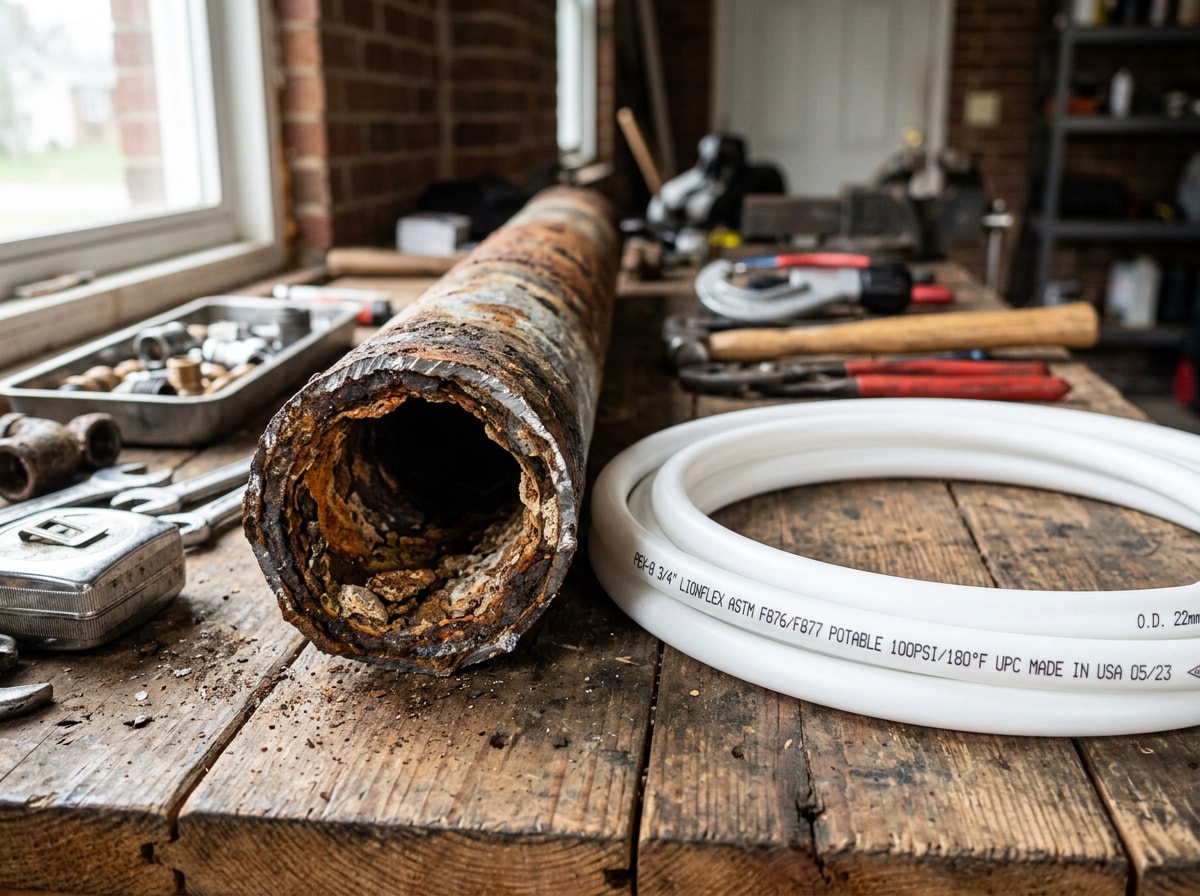
Hard water doesn't help. Research from Texas A&M AgriLife Extension on household water corrosion notes that corrosion can cause the entire metal surface to gradually thin, producing red stains in iron or steel plumbing systems , and that it can also create deep pits that penetrate pipe walls, eventually perforating a pipe and causing water damage to a home . That's exactly the failure pattern we see in older Dewey-Humboldt homes still running on original galvanized line.
Pipe Repair vs. Full Repiping: Which Does Your Home Need
Pipe repair fixes an isolated problem, like a single pinhole leak in an otherwise sound line. Repiping replaces the supply system throughout the house once corrosion or age has compromised the material broadly. The difference changes both the cost and the long-term outcome.
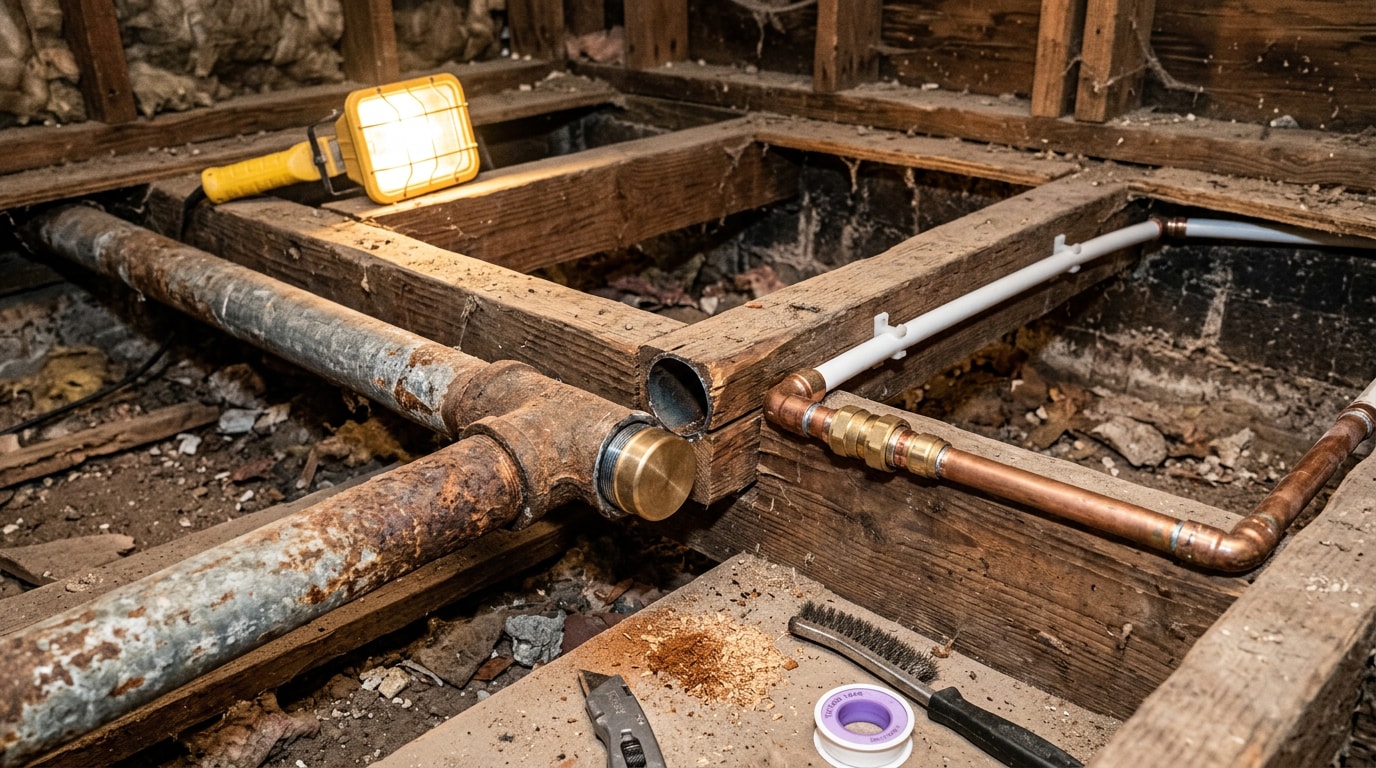
Pipe problems in Dewey-Humboldt homes range from a single pinhole leak in a copper line to a galvanized steel system that's corroded through after decades of service. When damage is isolated, a spot repair solves it. When corrosion has spread, replacing galvanized pipe with a PEX or copper repipe is usually the more cost-effective long-term answer. A plumber familiar with these older systems can tell you which approach fits after a proper inspection through our residential plumbing services.
Galvanized line in particular deserves a closer look as it ages. EPA guidance on lead sources in drinking water notes that lead particles can attach to the surface of galvanized pipes, and over time those particles can enter drinking water, causing elevated lead levels . That's one more reason a corroded galvanized system is worth replacing outright rather than patching indefinitely.
PEX vs. Copper: Which Pipe Material Fits Your Home
Once a repipe is the right call, the next decision is material. Both PEX and copper are used throughout our service area, and each has tradeoffs worth weighing against your home's layout and budget.
| Factor | PEX | Copper |
|---|---|---|
| Flexibility | Bends around framing, fewer fittings needed | Rigid; needs a fitting at every turn |
| Freeze resistance | Expands slightly, resists bursting | Rigid metal, more prone to splitting in a hard freeze |
| Corrosion resistance | Does not corrode or scale internally | Can develop pinhole leaks over time, especially with acidic or hard water |
| Typical install time | Faster, less wall-opening required | Slower; soldered joints take more labor |
| Track record | Decades of residential use, widely code-approved | Long-proven, often the choice for exposed or outdoor runs |
Neither material is automatically "better." Homes on well systems with harder water often lean toward PEX because it resists the scale buildup that accelerates corrosion in metal pipe. Homes with a lot of exposed outdoor plumbing sometimes stick with copper for its UV and pest resistance. If you want a deeper look at how PEX performs in this region specifically, our guide on PEX plumbing pipe in Sedona, AZ covers what to know before committing to a repipe.
How Our Dewey-Humboldt Repiping Process Works
Getting a repipe started begins with a plumbing appointment, confirming the scope of work, and making sure the crew arrives prepared with the right materials for your home's setup. From there, the process follows a predictable sequence:
- On-site diagnosis and pipe condition assessment
- A written quote outlining materials, scope, and timeline
- Permitting through the local building authority, where required
- The repipe work itself, done section by section to limit water downtime
- A final walkthrough and pressure test before the job is signed off
Permit requirements for residential repiping vary by scope and jurisdiction. Yavapai County's Development Services department confirms that a zoning clearance or building permit is typically required for renovations involving plumbing systems on residential property. A licensed plumber should handle that coordination directly, not leave it to the homeowner to sort out mid-project.
Licensed, Insured, and Local: Why That Matters for Repiping
Repiping an older home isn't the place to gamble on an unlicensed contractor. Dewey-Humboldt's mix of historic properties and rural parcels means pipe layouts, well systems, and decades-old materials vary quite a bit from one house to the next. Local, licensed experience means a plumber has actually seen how these systems age in this specific area, not just read about it somewhere else.
Are Your Plumbers Licensed and Insured?
Every plumber on our team is fully licensed and insured to perform plumbing work in Arizona, with training maintained for specialty work like tankless water heater installation, trenchless repair, and gas line service. Many properties in Dewey-Humboldt were built decades ago, so the materials inside them have already had decades of service. That local experience helps us recognize what that aging looks like before a small leak turns into a bigger one. You can verify any contractor's license status directly through the Arizona Registrar of Contractors' public search tool before signing a contract.
Service Area in and Around Dewey-Humboldt, Arizona
Our Dewey-Humboldt service area covers properties along the Agua Fria River corridor, older established neighborhoods on the Humboldt side of town, and residential areas throughout the Dewey community, including family homes and larger rural parcels with aging plumbing systems. Rural plumbing calls out here often involve well-fed systems and longer supply runs that denser subdivisions don't typically deal with.
If cast iron drain and waste lines are part of what's failing alongside your supply pipes, our breakdown of cast iron plumbing warning signs and repair options walks through that separately, since it's a different repair path than a supply-line repipe.
Ready to find out what your home actually needs? Get a free estimate and we'll assess your pipe condition before recommending anything.
FAQ
Do You Work on Older Homes in Dewey-Humboldt?
Yes. Older home plumbing is a regular part of our workload, since many Dewey-Humboldt properties were built with galvanized pipe and original fixtures still in service forty years later. We assess pipe condition and system configuration before recommending any repair or repipe.
How Long Does Repiping Take in Dewey-Humboldt?
A whole-home repipe typically runs 3 to 7 days, depending on the home's size and layout. Partial repiping, addressing just one section or floor, can often be finished in 1 to 2 days. Your actual timeline depends on the scope defined during the quote.
How Do I Know If I Need a Plumber?
Slow drains, recurring clogs, low water pressure, visible leaks, or an unexplained spike in your water bill are all worth calling about. If any of these line up with the signs covered earlier in this guide, it's worth scheduling an inspection through our plumber services sooner rather than later.
Will Repiping My Home Require Cutting Into Walls?
Some wall access is usually necessary, especially for a copper repipe or in slab-foundation homes. PEX's flexibility can reduce how much drywall needs to come down, since it bends through existing cavities with fewer access points. Your plumber should map out exactly where access will be needed during the quote, not after work starts.
Is Repiping Covered by Homeowners Insurance?
Generally no. Most homeowners insurance policies cover sudden, accidental damage, like water damage from a burst pipe, but not the cost of replacing aging or corroded pipe itself, since that's considered gradual wear and maintenance. Check your specific policy, but budget for repiping as a maintenance investment rather than an insurance claim.
How Much Does It Cost to Repipe a House?
Repiping cost varies based on home size, pipe material, number of fixtures, and wall access. PEX generally costs less to install than copper because it requires fewer fittings and less labor time. The most accurate number comes from an on-site inspection and written quote, since national averages don't account for well systems, crawlspace access, or rural layouts common around Dewey-Humboldt. Contact us for a free, no-obligation estimate specific to your home.