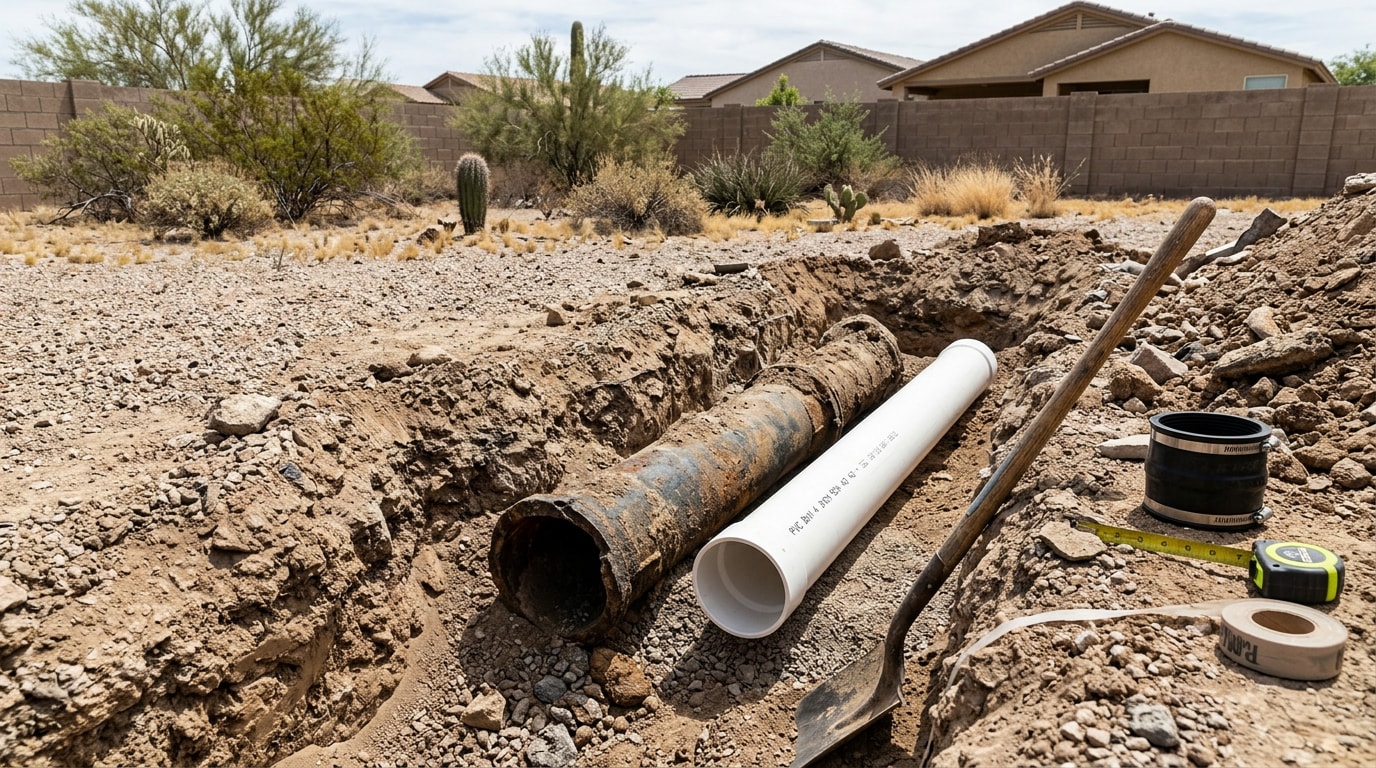
Cast iron plumbing in Dewey-Humboldt, AZ keeps a lot of homes built before the 1980s running, but these pipes don't last forever. Slow drains, sewage odors, and rust stains are usually the first clues that a line is corroding from the inside out. This guide covers the warning signs, what repair or replacement actually costs, and how to get a straight answer before a small problem turns into a yard full of sewage.
Dustin Elsea, owner of Elsea Plumbing and a Prescott-area native, has run plumbing calls on cast iron lines across Yavapai County for more than 30 years under Arizona ROC licenses 232301 and 232302. He's pulled camera footage on 1960s cast iron that still tests solid, and on 1970s pipe from a nearly identical install down the street that failed inside a decade. Age tells part of the story; soil chemistry and original workmanship tell the rest.
Warning Signs Your Cast Iron Pipes Are Failing
Licensed plumbers look for a handful of physical clues to decide whether a cast iron line needs patching or full replacement. Catching these early, before a backup floods a bathroom or a crack lets sewage into your yard, usually means a smaller bill and fewer surprises.
Slow Drains Throughout Your Home
When multiple drains slow down at once, not just one sink, it usually points to the main sewer line rather than an isolated clog. Rust and mineral scale build up on the interior pipe walls over the years, shrinking the usable diameter. Water and waste have less room to move, so drainage slows everywhere connected to that line.
Sewage Odors in Your Home or Yard
A properly sealed sewer line should never produce a noticeable smell indoors or out. When cast iron corrodes, the joints and pipe walls can develop small cracks that let sewer gas escape before it reaches the vent stack. A persistent odor near a bathroom, basement, or damp spot in the yard is a strong sign the line has already been compromised.
Frequent Drain Backups
A single clogged drain after a big dinner is normal. Backups that happen every few weeks, or a toilet that backs up when you run the washing machine, usually mean the pipe's internal diameter has narrowed enough that normal waste flow can no longer pass through consistently.
Visible Corrosion or Rust
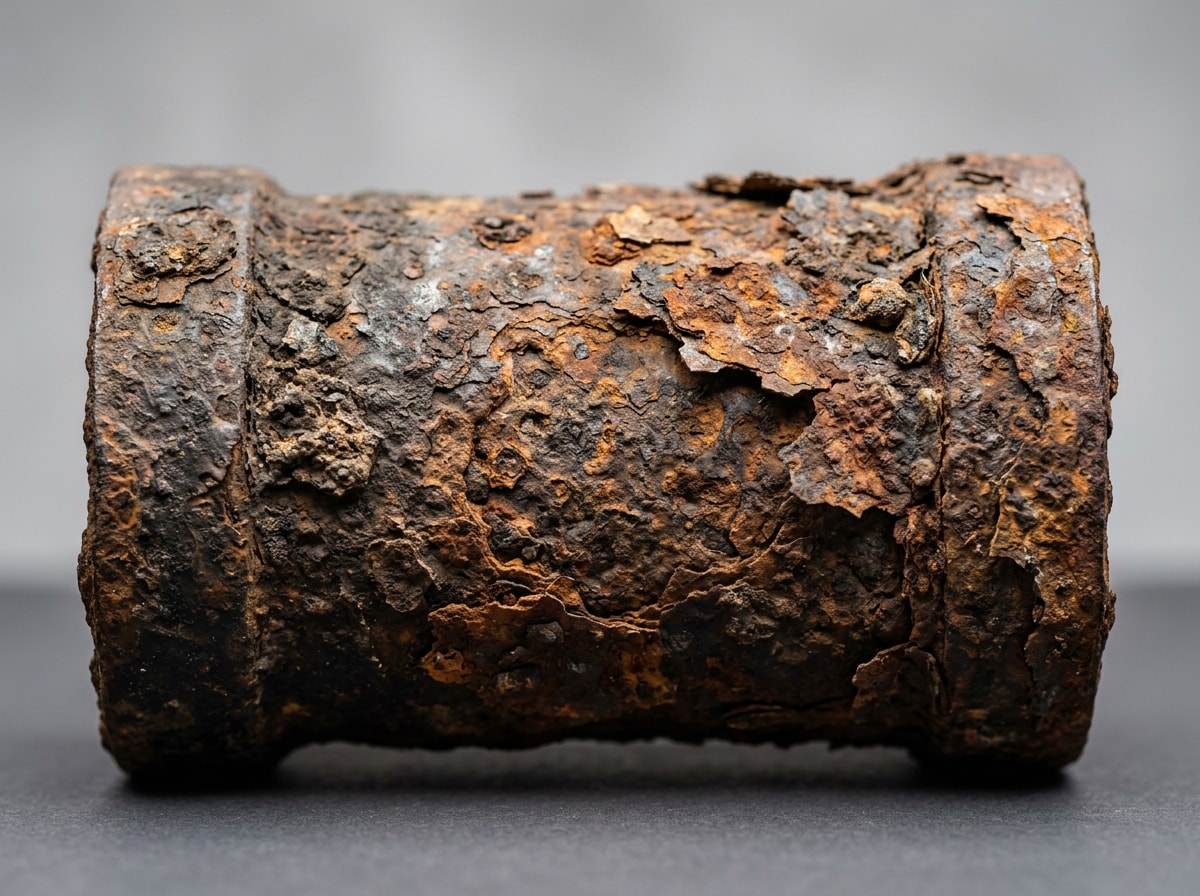
Visible rust stains, flaking, or a reddish-brown crust on an exposed section of pipe, often in a crawlspace or basement, tell you the corrosion has reached the surface. If it's visible from the outside, the interior damage is almost always worse. Pipe rust at this stage signals the wall has thinned enough to risk a sudden failure.
If you're seeing any of these signs, don't wait for a backup to force the issue. Request a free estimate and a licensed plumber can tell you exactly where your line stands before it fails.
Why Cast Iron Pipes Fail in Dewey-Humboldt's Older Homes
Cast iron pipes were the industry standard for decades because they were durable, fire-resistant, and quiet compared to earlier materials. Builders across Arizona relied on them for sewer lines and drain stacks well into the later part of the 20th century.
The problem is time. Cast iron corrodes from the inside out, and once that process starts, it doesn't reverse. A meaningful share of homes in and around Yavapai County were built during the decades when cast iron was standard practice, which means a chunk of the local housing stock is now reaching the age where corrosion becomes a real concern. If your home was built before the 1980s, it's worth knowing what to watch for before a small problem turns into a sewer line failure.
Get Your Pipes Inspected Before You Guess
A camera inspection is worth scheduling once your home passes the 40-to-50-year mark, after any warning sign above shows up, or before buying or selling a property with an unknown plumbing history. A licensed plumber threads a small video camera through the line to see exactly what's happening inside, without any digging.
Professional sewer camera inspections typically follow a standardized condition-grading approach, similar to the pipeline assessment framework published by NASSCO, so the findings aren't just a guess. A homeowner reading an inspection report should pay attention to that grade, not just the plumber's verbal summary, since it determines whether a targeted repair or a full replacement makes financial sense.
If it's been years since anyone has looked at your line, a sewer inspection is the clearest way to know where you actually stand.
DIY vs. Professional Repair: What You Can (and Can't) Fix Yourself
DIY repair only makes sense for small, isolated problems, like a pinhole leak or a weeping joint, not a corroded or collapsing section. For a small hole, the typical process is to clean the area with a wire brush, remove loose rust and debris, and apply plumber's epoxy putty directly over the leak, smoothing it into the surrounding pipe.
Most epoxy products need several hours of undisturbed cure time before water should run through the line again. This kind of patch buys time. It is not a permanent fix.
Cast iron pipe is also heavy, brittle with age, and dangerous to work on once a section is structurally compromised. If a pipe is sagging, visibly collapsing, or crumbling when touched, that's not a DIY project. Call a professional once damage extends beyond a single small leak, meaning widespread corrosion, a sagging or misaligned section, or any sign the pipe could fail structurally.
| Factor | DIY Epoxy Patch | Professional Repair |
|---|---|---|
| Cost | $20–$50 in materials | Several hundred to several thousand dollars, depending on scope |
| Time | An afternoon | One to several days for excavation or lining |
| Lifespan of fix | May hold for months | Designed to last for decades |
| Licensing & code compliance | Not applicable | Requires a licensed, bonded plumber for code-compliant work |
Arizona regulates who can legally perform sewer line repair and replacement work. You can verify a contractor's license through the Arizona Registrar of Contractors. For anything beyond a minor patch, a drain repair specialist should look at the line before the problem gets more expensive.
Replacing Cast Iron Pipe: Quotes, Permits, and Methods
Step 1: Get Multiple Quotes
Cast iron pipe replacement costs can vary by 30–50% between contractors for the same scope of work, so getting at least three quotes before committing is a smart habit, not an overcautious one. Price differences often come down to the method proposed (trenchless versus traditional), the materials specified, and how much restoration work is included afterward.
When comparing estimates, look past the bottom-line number. Check what each quote includes for permits, cleanup, landscaping restoration, and warranty length. A lower number that excludes permit fees or site restoration isn't actually the cheaper option once the job is finished.
Step 2: Understand Permits and Inspections
Replacing a sewer line typically requires a permit before work begins and an inspection once it's complete. This isn't optional paperwork. It protects you as the homeowner by confirming the finished work meets local plumbing code.
The general sequence is an application, a permit fee, an approval window, an inspection during or after the work, and a final sign-off from the local building department. For Dewey-Humboldt properties, that means checking requirements through Yavapai County Development Services, since the county administers building and plumbing permits for the area. Confirm exact steps, fees, and timelines with your contractor before work starts.
Step 3: Choose a Replacement Method
There are two broad paths for replacing a failing cast iron line: full excavation-and-replace, or trenchless lining that works inside the existing pipe. Which one makes sense depends on the pipe's condition and how accessible the line is.
Full replacement with PVC means digging up the old cast iron line and installing new PVC in its place. This is usually the right call when sections have collapsed, shifted out of alignment, or sustained damage severe enough that lining wouldn't hold. A crew handling this kind of project typically needs excavation services to reach and replace the line safely.
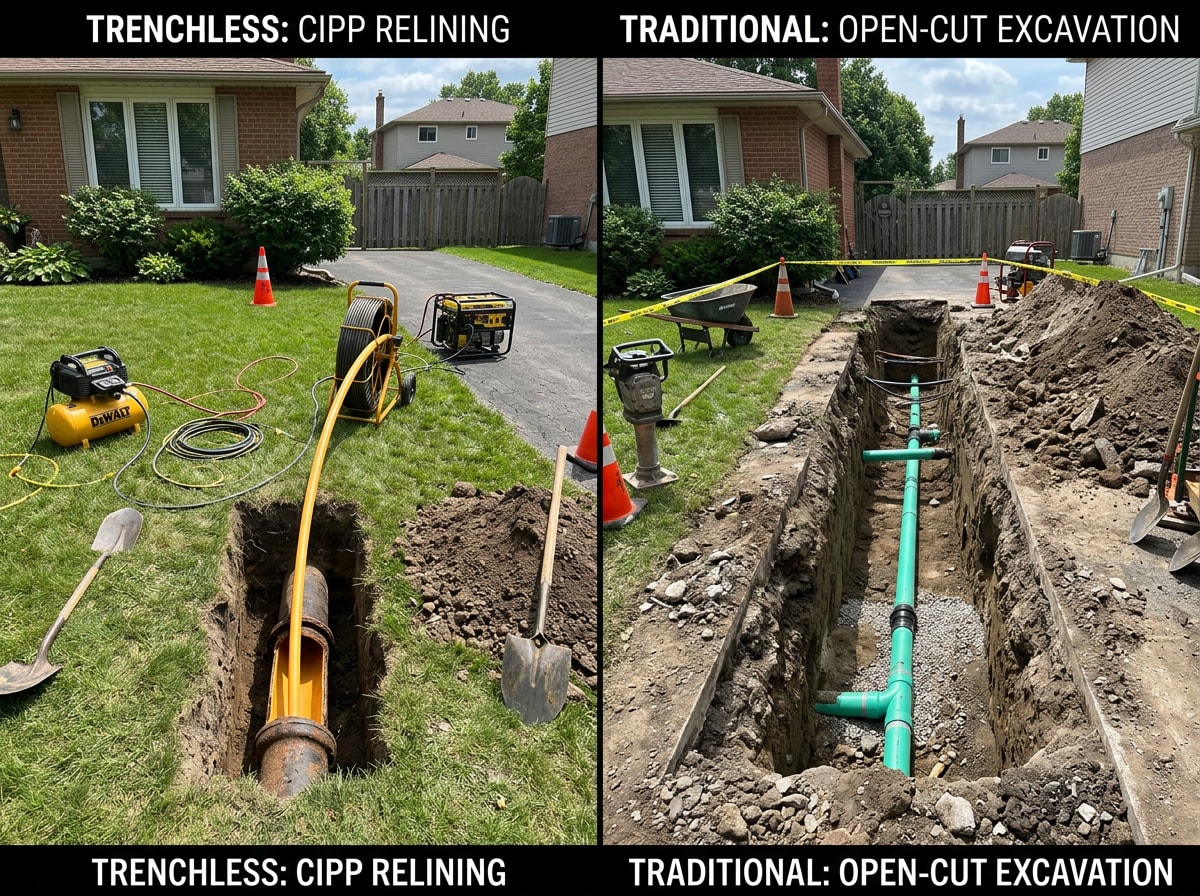
Trenchless repair, often cured-in-place pipe (CIPP) lining, creates a new pipe inside the old one without major digging. It costs more per linear foot than traditional excavation but causes far less disruption to landscaping, driveways, or foundations.
| Method | Best For | Disruption | Relative Cost |
|---|---|---|---|
| Trenchless (CIPP) lining | Isolated cracks, moderate corrosion, intact pipe shape | Minimal digging, little landscape damage | Higher per linear foot |
| Traditional excavation | Collapsed, misaligned, or severely damaged sections | Torn-up yard, longer timeline | Lower upfront, more restoration cost |
For pipes with isolated cracks or moderate corrosion, trenchless lining is frequently the better fit. For collapsed or severely misaligned sections, traditional replacement is usually unavoidable. If your property needs utilities mapped before digging starts, utility locating protects the rest of your yard from accidental damage during the dig.
Does Insurance Cover Cast Iron Pipe Replacement?
Once homeowners learn that replacing a cast iron sewer line can run into the thousands of dollars, the insurance question comes up almost immediately. The answer depends heavily on your specific policy and the cause of the damage.
Homeowners insurance generally covers sudden, accidental damage, such as a pipe that bursts without warning and the resulting structural damage to floors or drywall. According to the Insurance Information Institute, standard homeowners and renters policies provide coverage for burst pipes, wind driven rain and damage resulting from ice dams on your roof , but the framework is built around sudden, unexpected loss rather than damage that developed over time.
Gradual deterioration is the sticking point. Most policies exclude damage caused by wear and tear, long-term corrosion, or a pre-existing condition the pipe already had before the policy started. Since cast iron corrosion happens slowly over years, insurers often classify related damage as maintenance rather than sudden, which is exactly why catching warning signs early matters financially, not just structurally.
If a cast iron failure turns into an after-hours emergency, our 24/7 plumbing guide for Paulden, AZ covers what to expect from an emergency response in the same high desert conditions found around Dewey-Humboldt.
FAQ
What are the signs you need cast iron pipe replacement?
The clearest signs are slow drains across multiple fixtures, a persistent sewage odor indoors or in the yard, and frequent drain backups that keep recurring despite clearing them. Visible rust or corrosion on an exposed section of pipe is another strong indicator. Any combination of these is worth a professional inspection.
How do I know if my home has cast iron pipes?
Check an exposed section in the basement, crawlspace, or utility area. Cast iron is dark gray or black, heavy, and often has a slightly rough, matte surface, unlike the smooth white or tan finish of PVC. If your home was built before the 1980s in Dewey-Humboldt or elsewhere in Yavapai County, cast iron drain lines are common enough that it's worth checking.
How long do cast iron pipes last?
Cast iron pipes typically last 50 to 100 years, though the real-world range varies widely based on soil conditions, water chemistry, and how well the system has been maintained. A home built in the mid-20th century could be approaching the end of its pipe's useful life now, even without obvious symptoms yet.
How much does it cost to replace cast iron pipes?
Nationally, cast iron pipe replacement often falls somewhere between $5,000 and $25,000, depending on pipe length, access difficulty, and whether trenchless or traditional methods are used. Local pricing in the Dewey-Humboldt and Prescott area can differ based on soil conditions and site access, so a general range shouldn't replace an actual quote from a licensed plumber who has seen your property.
Can a cast iron sewer line be relined instead of replaced?
Often, yes. If the pipe's shape is still intact and damage is limited to cracks, pitting, or moderate corrosion, cured-in-place lining can restore the line without digging up the yard. Collapsed, severely misaligned, or crushed sections usually can't be lined and need traditional excavation instead.
Is it better to repair or replace cast iron sewer pipes?
Repair or lining makes sense when damage is isolated and minor, such as a single crack, a small leak, or moderate scaling. Full replacement becomes the better option once damage is widespread, structural, or affects multiple sections of the line. If you're unsure which category your situation falls into, contact Elsea Plumbing for a professional inspection and a free estimate before committing to either path.