Escutcheon plumbing in Prescott, AZ starts with a part most homeowners never learn the name of: the small plate hiding the pipe hole behind your faucet, shower arm, or toilet supply line. Get the size, shape, or finish wrong and you're left with either a visible gap that lets moisture behind the tile or a mismatched plate that makes a brand-new faucet look unfinished. Here's what that plate actually does, which type fits your fixture, and when swapping it is a five-minute job versus a call to a licensed plumber.
What Is an Escutcheon in Plumbing?
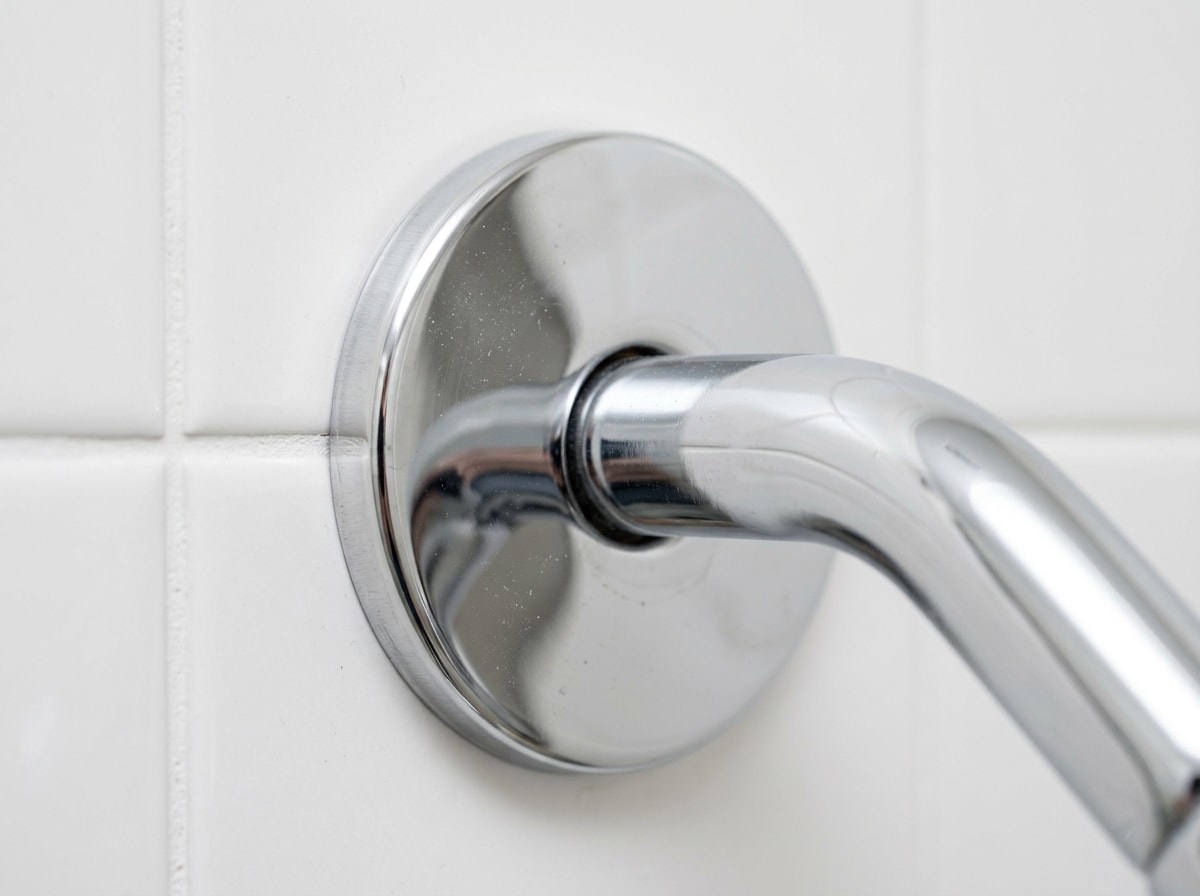
An escutcheon is a decorative plate installed behind a faucet, showerhead, toilet, or sink supply line to cover the hole where a pipe or valve passes through a finished wall or floor. It conceals rough plumbing penetrations, protects the surrounding surface, and gives any fixture a clean, finished appearance.
You might also hear it called a flange, trim plate, or cover plate. These are different names for the same plumbing fixture accessory, and which word your supplier uses usually just comes down to region or catalog habit.
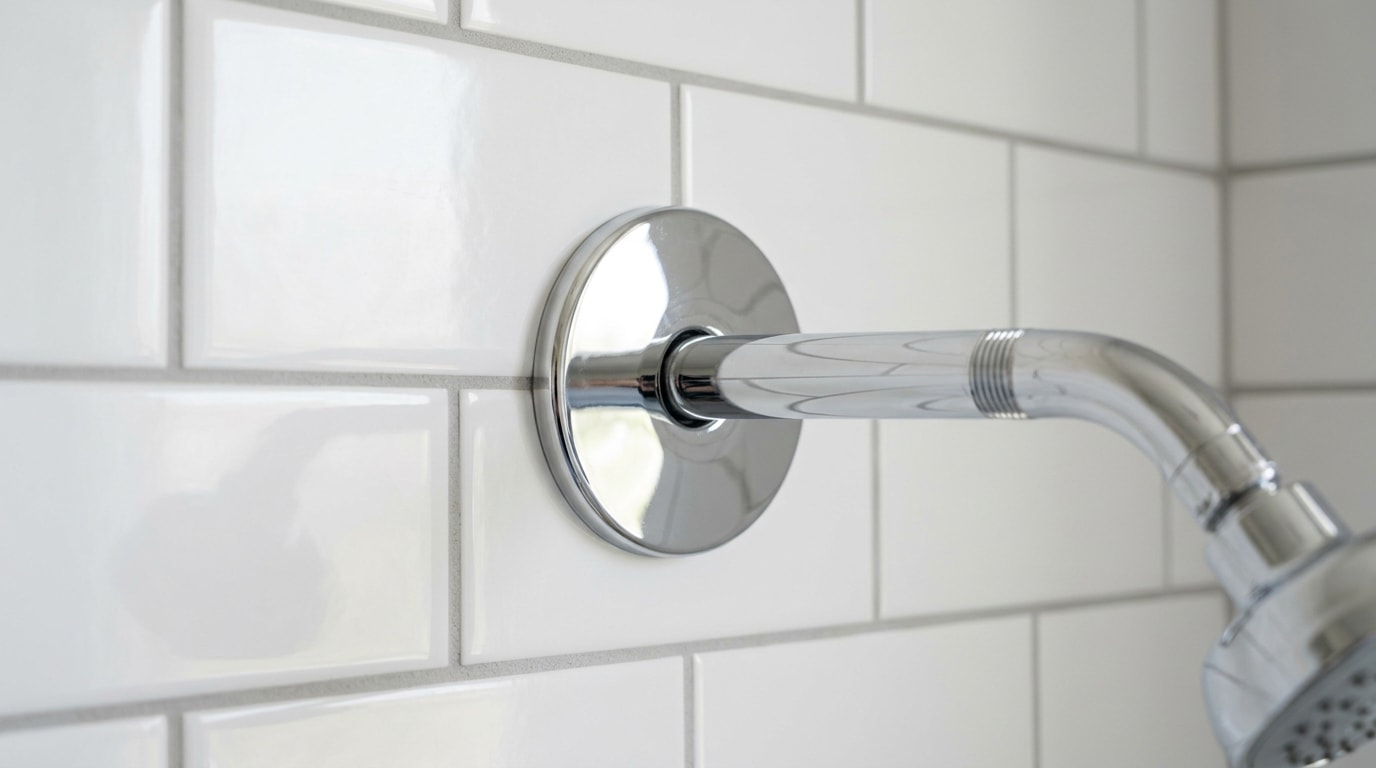
On service calls around Yavapai County, we see more cracked or missing escutcheons at shower arms than anywhere else in the house, usually on homes built before a remodel updated the fixtures but not the trim.
Why Escutcheons Matter for Plumbing Upgrades in Prescott, AZ
Escutcheons do more than look nice. They hide the hole cut into your wall or floor, which supports real leak prevention rather than just decoration.
Any time you tackle a plumbing upgrade (a new showerhead, a faucet replacement, or a sink swap) you'll likely need to remove or replace the escutcheon too. Picking the right size, shape, and finish keeps the look consistent and helps avoid gaps that let moisture sneak behind tile or cabinetry.
Local water conditions make the finish choice matter more here than in a lot of places. The City of Prescott's water is considered moderately hard, averaging 75 to 130 ppm, which equals 4.3 to 7.6 grains per gallon. That mineral load builds up on cheap plated finishes over time, so a plastic or thin-chrome escutcheon tends to pit and discolor faster than solid brass or brushed nickel. If hard water is already leaving spots on your fixtures, our water treatment service can address that at the source instead of just the symptom. Our residential plumbing team handles escutcheon fitting on nearly every fixture job.
Types of Escutcheon Plates: Standard vs. Oversized vs. Custom
Escutcheon plates come in two basic designs:
- Split (two-piece) escutcheons open around a pipe without disconnecting it.
- Solid ring escutcheons slide on before a fixture is attached.
Both are made in finish families like polished chrome, brushed nickel, oil-rubbed bronze, matte black, and brushed gold, sized to the pipe diameter and the gap that needs covering. Those finishes are typically offered as chrome, matte black, brushed nickel, spot resist brushed nickel, brushed gold, or bronzed gold on major fixture lines, so matching an existing trim kit is usually possible without replacing the whole valve.
Beyond design, escutcheons also come in standard, oversized, and custom sizes. The right pick depends on the opening size, the fixture type, and how much coverage the installation actually needs.
| Type | Best For | How It Installs |
|---|---|---|
| Split (two-piece) | Pipes already connected to fixtures | Opens around the pipe, no disconnection needed |
| Solid ring | New installations | Slides on before the fixture is attached |
| Standard | Typical wall or floor openings | Fits common pipe sizes directly |
| Oversized | Larger or uneven openings | Covers wider gaps left by old fixtures |
| Custom | Unusual pipe sizes or decorative needs | Ordered or fabricated to spec |
How to Remove and Replace an Escutcheon
Replacing an escutcheon usually takes basic hand tools and under twenty minutes. Most homeowners can manage a straightforward swap, though a few situations call for extra caution.
Shower Arm Escutcheons
Most escutcheons are simple to remove. A shower arm escutcheon slides over the arm and sits snug against the tile. Unscrew the showerhead first, then slide the old escutcheon off. This slide-off design has no sealant or hardware holding it in place, just friction and gravity.
Hard-to-Reach Escutcheons Behind Shutoff Valves
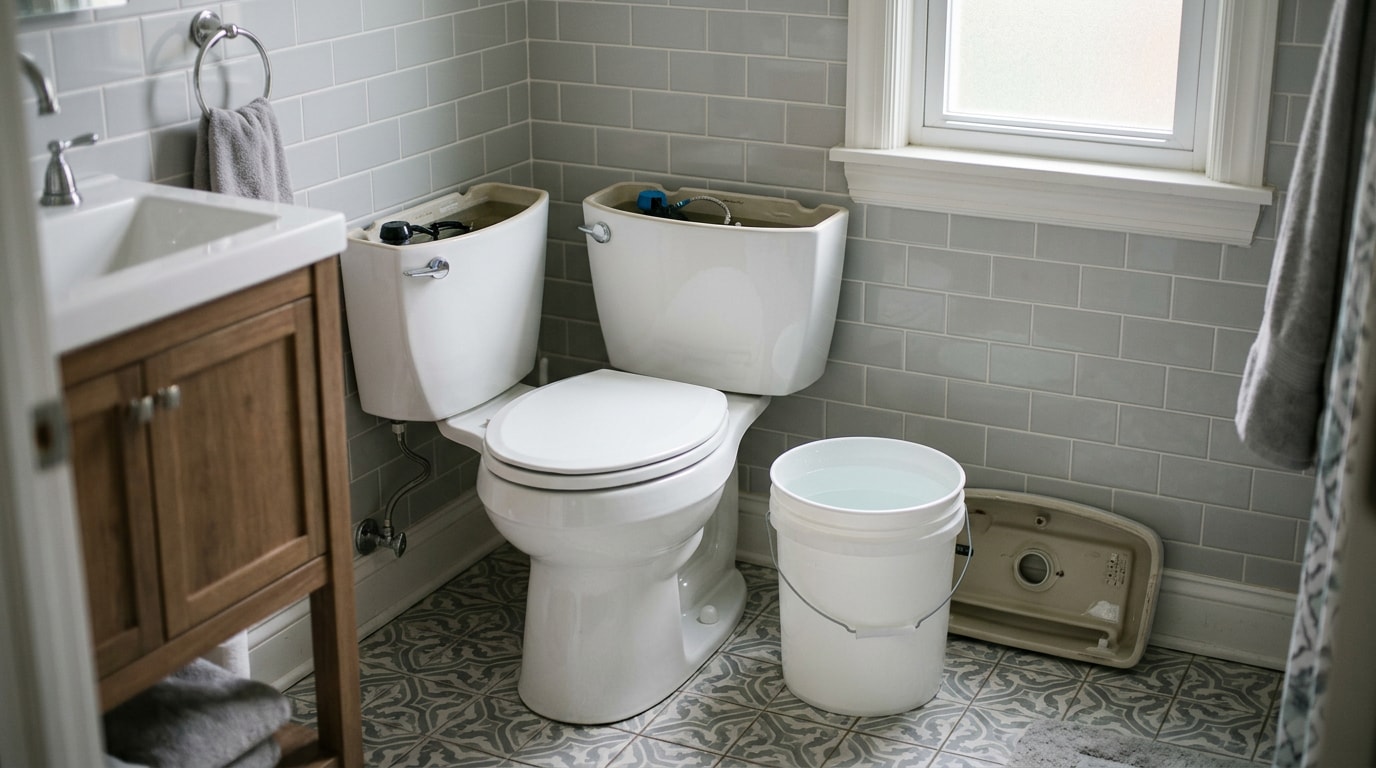
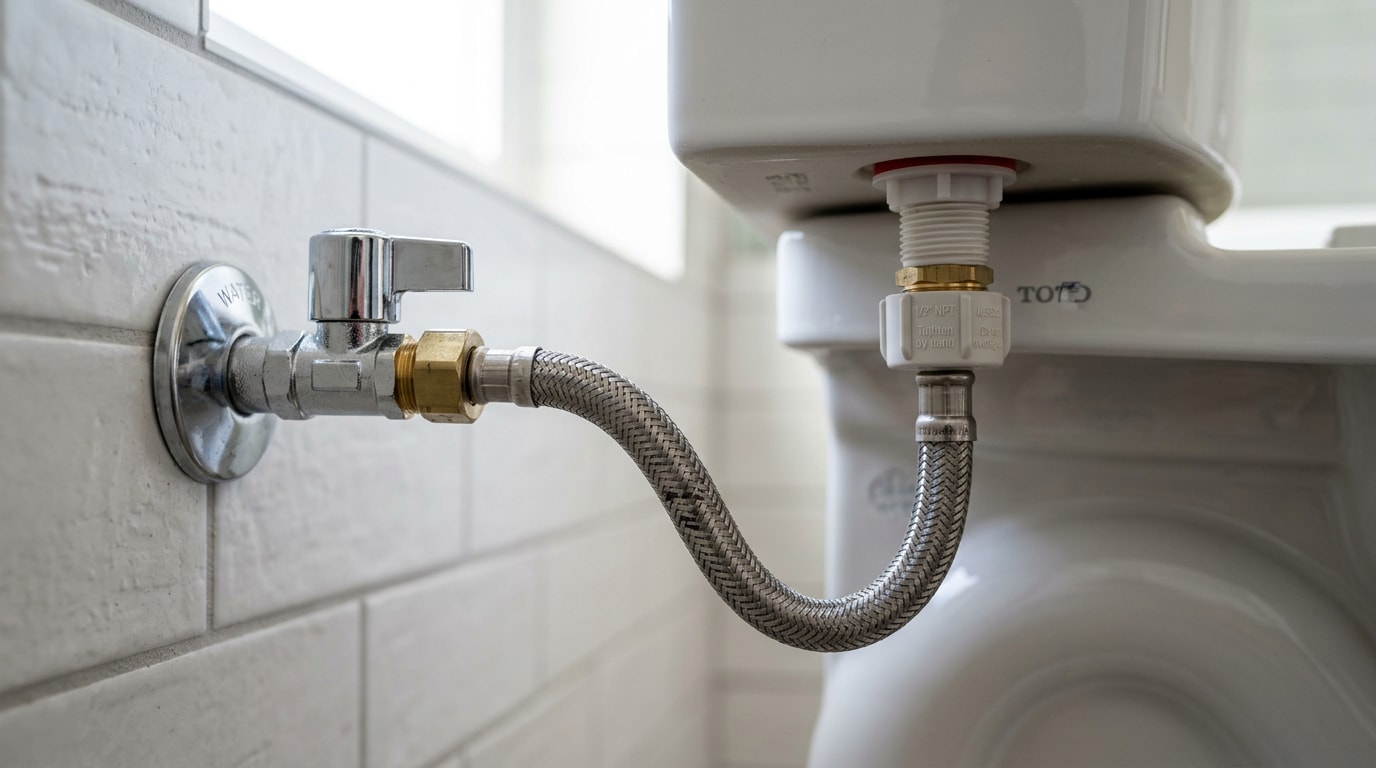
Escutcheons behind a toilet or under a sink are trickier because a shutoff valve often blocks the way, and that valve has to come out first.
Threaded valves usually loosen with pliers wrapped in a soft towel to protect the finish. Soldered valves are different: they require a torch and new sweated joints, which isn't a reasonable DIY repair. If you find a soldered valve, or any moisture behind the tile, stop and call a licensed plumber.
Before you loosen anything near an active supply line, know how to shut the water off at the source. Locate the main water shut-off valve in your home, and if there is a problem or the valve will not close, contact a reliable plumber and get it fixed as soon as possible.
Installing the New Escutcheon
Once the old valve or escutcheon is clear, reassembly is quick:
- Slide the new escutcheon onto the pipe or valve stem.
- Reconnect or re-solder the valve if one was removed.
- Reattach the fixture and check for a flush, snug fit.
If anything binds, leaks, or the opening is oversized for a standard plate, that's the point to stop and call in a pro rather than force it. You can see examples of finished fixture work on our projects page, and if you'd rather skip the trial and error altogether, get a free estimate and we'll handle the swap start to finish.
Escutcheon issues sometimes point to a bigger problem hiding behind the wall, especially persistent moisture or a loose fitting that won't seat right. If that's what you're seeing, a plumbing camera inspection can confirm what's actually happening inside the wall before you spend money guessing.
FAQ
Do I need a new escutcheon with my new fixture?
Not always, but it often helps. An older escutcheon can look worn or clash with a new faucet or showerhead's finish. Since these plates are inexpensive, matching the fixture finish is an easy way to improve the whole room's finished look.
What is the purpose of an escutcheon?
An escutcheon covers the rough hole where a pipe or valve passes through a wall or floor. It creates a finished look, shields the surface edge from moisture, and closes gaps that could otherwise let in pests, cold air, or water.
Why is water getting behind my shower escutcheon?
Usually because the plate isn't sitting flush against the tile, the caulk seal behind it has broken down, or the trim plate is the wrong depth for the wall. Covering pipe penetrations in finished, visible areas isn't optional trim under a code built around fire, flood and water intrusion resilience ; it's a baseline requirement most jurisdictions, including Prescott, enforce through the adopted plumbing code.
Can a homeowner replace an escutcheon or trim plate?
Often, yes. A simple slide-off swap is within reach for a careful DIY repair. But if the job involves a soldered valve, a suspected leak, or any structural concern, call a licensed Prescott plumber.
What's the difference between an escutcheon and a flange?
In plumbing, the terms are used interchangeably most of the time. Both describe the trim plate that covers a pipe or valve opening at a finished surface; "flange" is just the more common term at floor-mounted fixtures like toilets.
Whether it's a quick trim swap or something bigger found behind the wall, our team at Elsea Plumbing serves homeowners throughout Prescott and the surrounding area. Contact us for a free estimate and we'll get it sorted.