Knowing how to flush a toilet with no water in Chino Valley, AZ keeps your bathroom usable during a well outage, a line break, or a planned repair. The trick isn't restoring pressure, it's recreating the quick dump of water your toilet already uses to push waste through the trap. Here's exactly how to do it with tools most households already have on hand.
Why Chino Valley Homes Lose Water Without Warning
Chino Valley doesn't pull water from one central treatment plant. The Town of Chino Valley serves water pumped from a network of groundwater wells that tap into the aquifers of the Little Chino sub-basin below the town. That setup matters for homeowners: a single well going down for maintenance or a line break on one side of town can cut water to a cluster of homes while the rest of Chino Valley keeps running normally.
If your water is out right now, check the Town of Chino Valley Water & Sewer Services page for outage status and emergency contact numbers before assuming the problem is inside your house. Homes on private wells or in areas like Chino Valley served by septic systems instead of town sewer have their own set of outage causes, which is worth ruling out early.
How a Toilet Actually Flushes
A toilet flushes using gravity, not water pressure. The tank dumps water into the bowl fast enough to push waste through the trap and down the drain.
Because gravity does the work, you don't need pressurized water from the pipes. You just need to recreate that fast water dump by hand.
Use Your Last Free Flush First
Right after your water shuts off, your tank is still full from before. That's one flush left, free of charge, in every toilet in the house.
- Save it for a real need instead of using it out of habit.
- Remember this applies per toilet, so a three-bathroom home effectively has three free flushes banked.
- Once that flush is gone, move to one of the two manual methods below.
Method 1: Manually Fill the Tank
This mimics a normal flush almost exactly, which makes it the better option if you want consistent results.
What you'll need:
- A clean 2 to 3 gallon bucket
- A water source (bathtub reservoir, bottled water, collected rainwater)
- An optional funnel to keep spills away from the tank's float and fill valve
Steps:
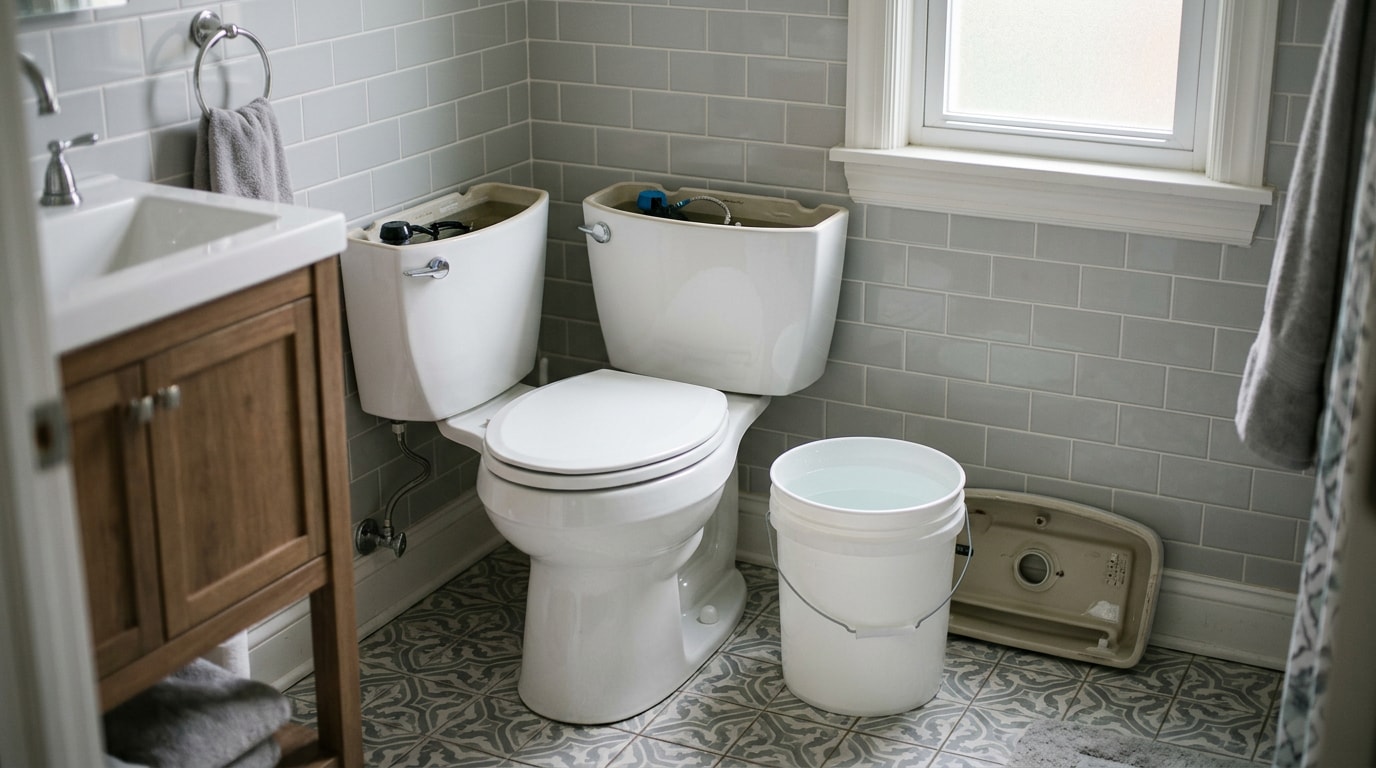
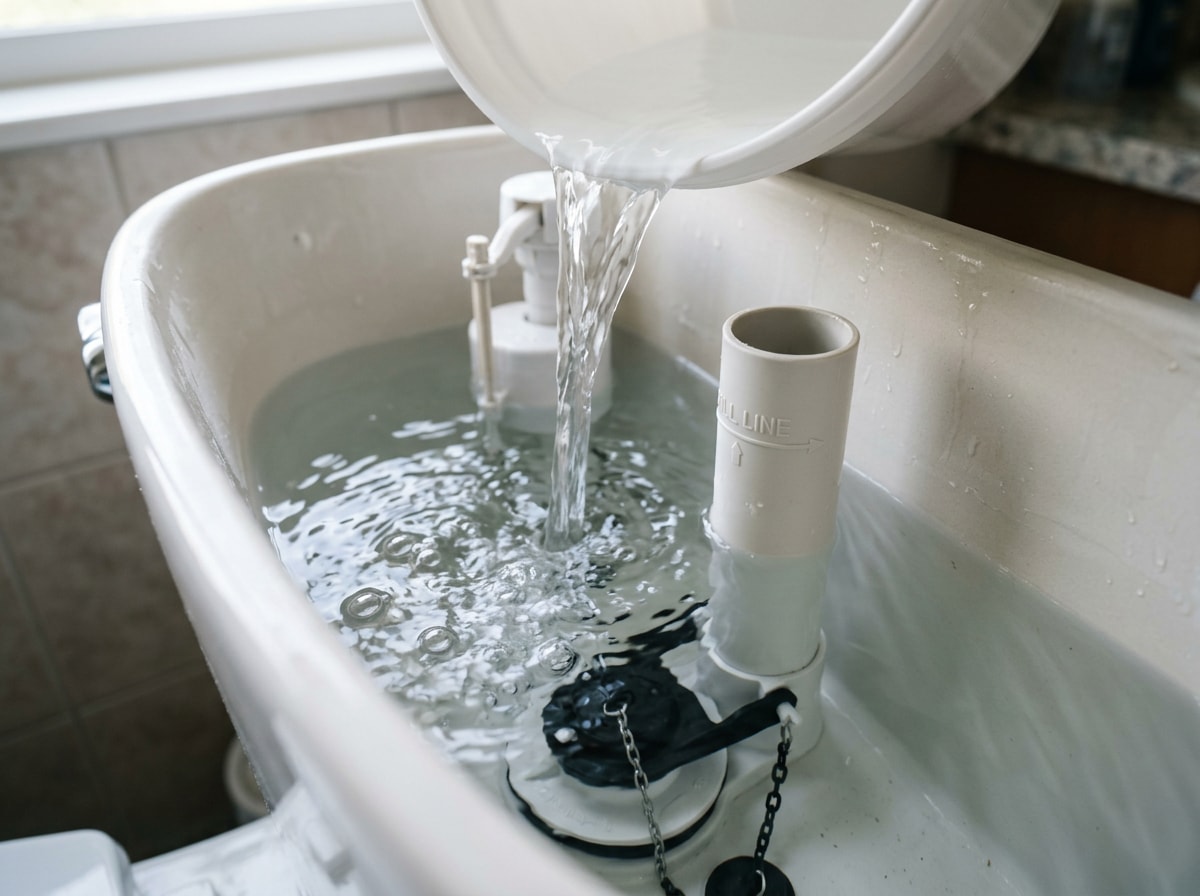
- Remove the tank lid and set it aside somewhere stable.
- Pour water into the tank until it reaches the overflow tube's fill line.
- Press the flush handle like normal.
The Energy Policy Act of 1992 established the maximum flush volume for gravity tank-type toilets at 1.6 gallons per flush. That's your rough pour target for most tanks installed since the mid-1990s. Newer WaterSense-labeled models use even less.
Method 2: Pour Water Directly Into the Bowl
This skips the tank entirely and works faster when you just need a one-time flush.
What you'll need:
- A one-gallon bucket of clean water or graywater
Steps:
- Fill the bucket with about one gallon of water.
- Pour slowly at first, then quickly, aiming for the center of the bowl from about waist height.
- Repeat with a second bucket if the first pour doesn't fully clear the bowl.
Best Water Sources When the Supply Is Off
Not every water source is appropriate for every job. Here's what works for flushing specifically:
- Pre-filled bathtub reservoirs
- Bottled water
- Collected rainwater
- Pool or hot tub water (flushing only)
Store at least 1 gallon of water per person, per day for 3 days, which you can use during an emergency for drinking, cooking, brushing teeth, and other uses. If you're stretching a limited supply, prioritize drinking water for people and save pool, pond, or rainwater for the toilet.
What to Check Before and After You Flush
A few precautions keep a water outage from turning into a plumbing repair:
- Avoid dirty sources like mop buckets. Contaminated water can clog pipes further down the line.
- Confirm your drain line is actually working before pouring, since a manual flush won't fix a clog.
- Never overfill the tank past its marked line.
- If flushing still doesn't clear the bowl after two attempts, stop pouring and check for a blockage instead of wasting water.
If a toilet that flushed fine before the outage still won't clear once water is restored, that's usually not a water problem anymore. Our residential plumbing team can diagnose whether it's a clog, a worn flapper, or something further down the line.
When a Water Outage Points to a Bigger Problem
Most outages in Chino Valley resolve on their own once the town or your well system is back up. But a few patterns are worth flagging to a plumber instead of just waiting it out:
- Water loss that only affects one fixture or one bathroom, even though the rest of the house has pressure.
- Repeated short outages from the same private well, which can point to a failing pump or a cracked line rather than a town-wide issue.
- Slow drainage that was already happening before the water went out, since that can mean a septic or sewer line problem unrelated to supply.
Homes on septic systems have an extra variable: a full or failing tank can mimic flushing problems that look like a water issue at first. If your property relies on septic, our septic system maintenance service checks tank levels and drain field function so an outage doesn't mask a bigger repair. For a deeper look at handling outages and after-hours plumbing failures in this area, see our guide to 24-hour emergency plumbing service in Chino Valley.
FAQ
Can you flush a toilet without running water?
Yes. Use either the tank-fill method or the direct bowl-dump method described above. Both recreate the gravity flush your toilet normally relies on.
How much water do you need to manually flush a toilet?
Most flushes need 1 to 2 gallons, which lines up with the 1.6-gallon federal standard for tank-type toilets. Bowl-dump flushes sometimes need slightly more water than tank fills.
Is it safe to use pool water to flush a toilet?
Pool or pond water works fine for flushing only. Don't use it for drinking, cooking, or handwashing unless it's been properly treated first.
How many times can you flush a toilet without running water?
There's no hard limit. You can repeat either method as many times as you have water available. The real constraint is your water supply, not the toilet itself.
What if the toilet still won't flush after I add water?
Stop pouring and check for a clog before trying again. If the bowl fills but drains slowly or not at all, the problem is the drain line, not the lack of water, and a drain repair may be needed once service is restored.
Will a well outage in Chino Valley affect just my house or the whole neighborhood?
It depends on the cause. A single well or line serving your cluster of homes can go down while the rest of town stays unaffected, since Chino Valley pumps water from multiple groundwater wells rather than one central source.
If a water outage turns into a flushing problem that doesn't clear up on its own, the licensed plumbing team at Elsea Plumbing serves Chino Valley and the surrounding tri-city area. Get a free estimate and we'll get your bathroom back to normal.