A toilet running in Chino Valley, AZ almost always comes down to one of four worn tank parts, and the fix is usually faster (and cheaper) than homeowners expect. This guide breaks down why it happens, what it's actually costing you on a Chino Valley water bill, and exactly when a DIY fix is enough versus when to call a plumber.
Why Is Your Toilet Running? The 4 Most Common Causes
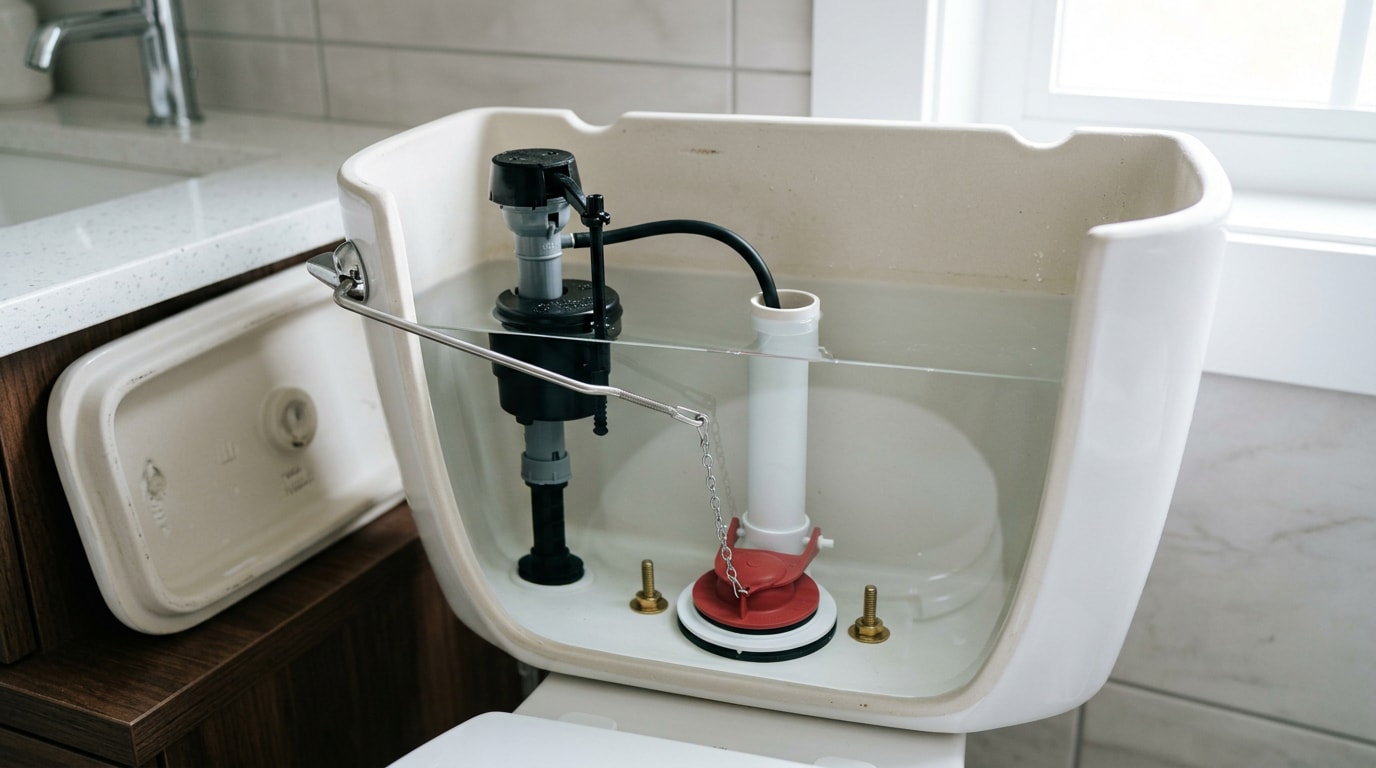
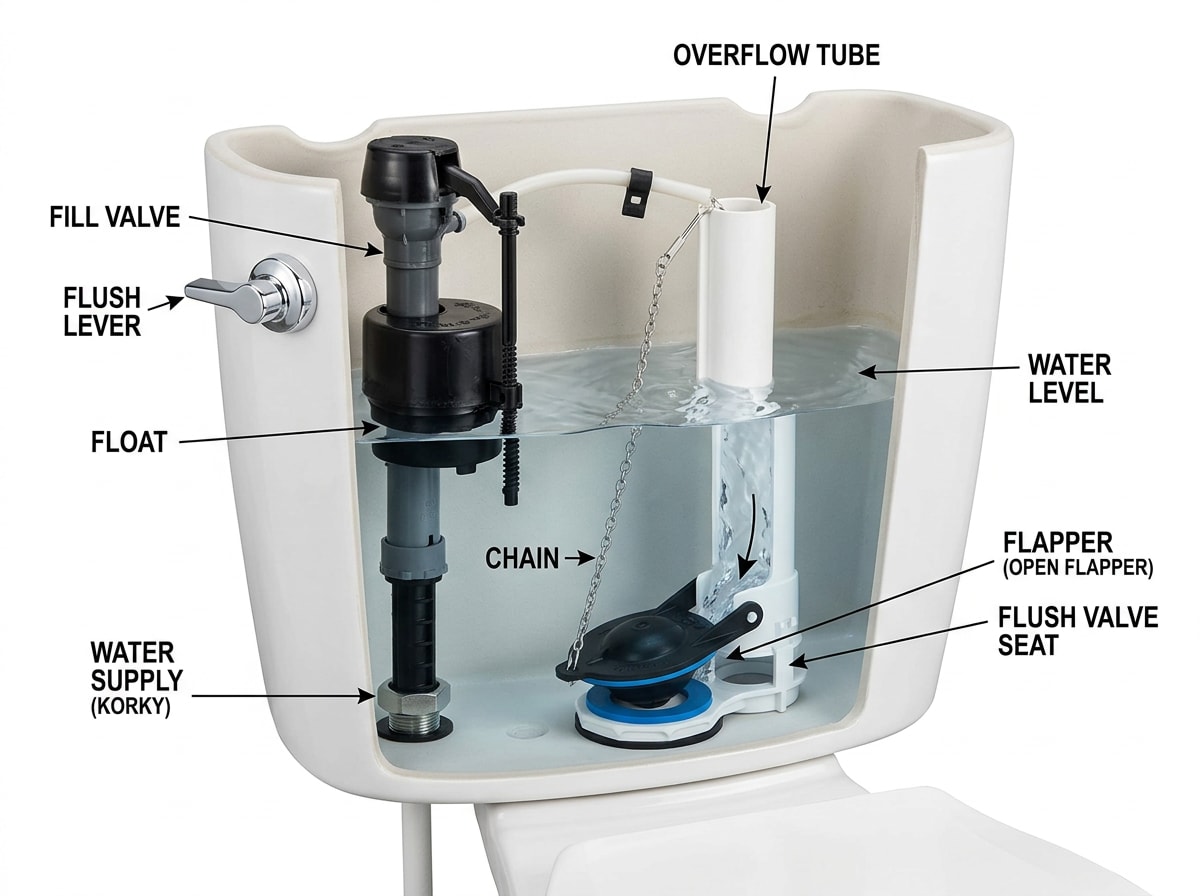
A running toilet means water is leaking from the tank into the bowl after the flush cycle should have ended. There are only a handful of parts inside the tank, so the list of suspects is short.
| Part | What You'll Notice | Typical Fix |
|---|---|---|
| Flapper | Hissing sound, tank refills every few minutes | Flapper replacement |
| Fill valve | Won't shut off, water trickles into the overflow tube | Fill valve replacement |
| Float | Water level set too high or too low | Float height adjustment |
| Chain | Flapper won't seat, slow steady leak | Chain length adjustment |
A flapper that's cracked, warped, or coated in scale can't form a tight seal, so water seeps past it continuously, even when it looks fine at a glance. A fill valve that won't shut off keeps trickling into the overflow tube long after the tank should be full. A float set too high lets water spill into the overflow before the valve ever cuts off, and a chain that's tangled or sized wrong keeps the flapper from dropping into place.
In Chino Valley, well water pulled from the Little Chino sub-basin carries heavy mineral content, and that mineral scale coats flush valves and flapper seats faster than it would in a softer-water region. That's one reason flapper and fill valve failures show up here more often than the national average would suggest.
What a Running Toilet Is Actually Costing You in Chino Valley
This is the part most guides skip, and it's worth doing the local math. A running toilet can waste about 200 gallons every day , which adds up to roughly 6,000 gallons a month for a single leaking flapper or fill valve.
The Town of Chino Valley bills residential water on a tiered structure, and under the Consolidated Fee Schedule that took effect in 2026, the lowest tier runs about $5.79 per 1,000 gallons before sewer charges are added. At that rate, 6,000 extra gallons a month adds roughly $35 to the water portion of a bill alone, and a leak severe enough to push usage into a higher tier costs even more per gallon.
That math matters more here than in most places. According to ADWR studies completed in 1999, the Prescott AMA was officially declared to be out of safe-yield , meaning the region (which includes Chino Valley) has been pumping groundwater faster than it recharges for over two decades. A running toilet isn't just a line item on a bill in a basin like this; it's water that doesn't come back easily.
Letting a running toilet go for a few weeks can quietly turn into one of the largest avoidable expenses on a water bill. For a wider breakdown of what fixes typically run across the area, see our plumbing services cost guide for Paulden, AZ, which covers similar high-desert homes.
Running Toilet vs. Clogged Toilet: Know the Difference First
A running toilet keeps refilling on its own, hours after the last flush. A clogged toilet does the opposite: it won't flush fully, or it backs up when you try. Knowing which one you have before calling for repair saves a diagnostic trip.
Most clogs trace back to items that shouldn't have been flushed, or buildup that accumulates slowly inside the trap and drain line. Older toilets sometimes lose flushing pressure over time, which makes any partial blockage harder to clear on the first try. If flushing is weak and the bowl is slow to empty rather than running nonstop, the issue is almost always downstream of the tank, not inside it.
DIY Fix or Call a Plumber?
A tangled chain, a float set too high, or an obviously worn flapper are all fair game for a DIY fix. These jobs take under an hour and the parts cost very little.
Here's where DIY stops making sense:
- The toilet keeps running again within a week or two of a repair
- You notice water pooling on the floor around the base
- The toilet rocks when you sit on it
- The flush valve seat itself looks cracked or corroded, not just the flapper
A homeowner who replaces a flapper when the real problem is a cracked flush valve seat will likely be back at the hardware store within days, paying for the same part twice. If the toilet needs no water to flush at all during a repair or outage, our guide on how to flush a toilet with no water in Chino Valley covers the interim steps.
Flapper, Fill Valve & Float Replacement: What the Repair Involves
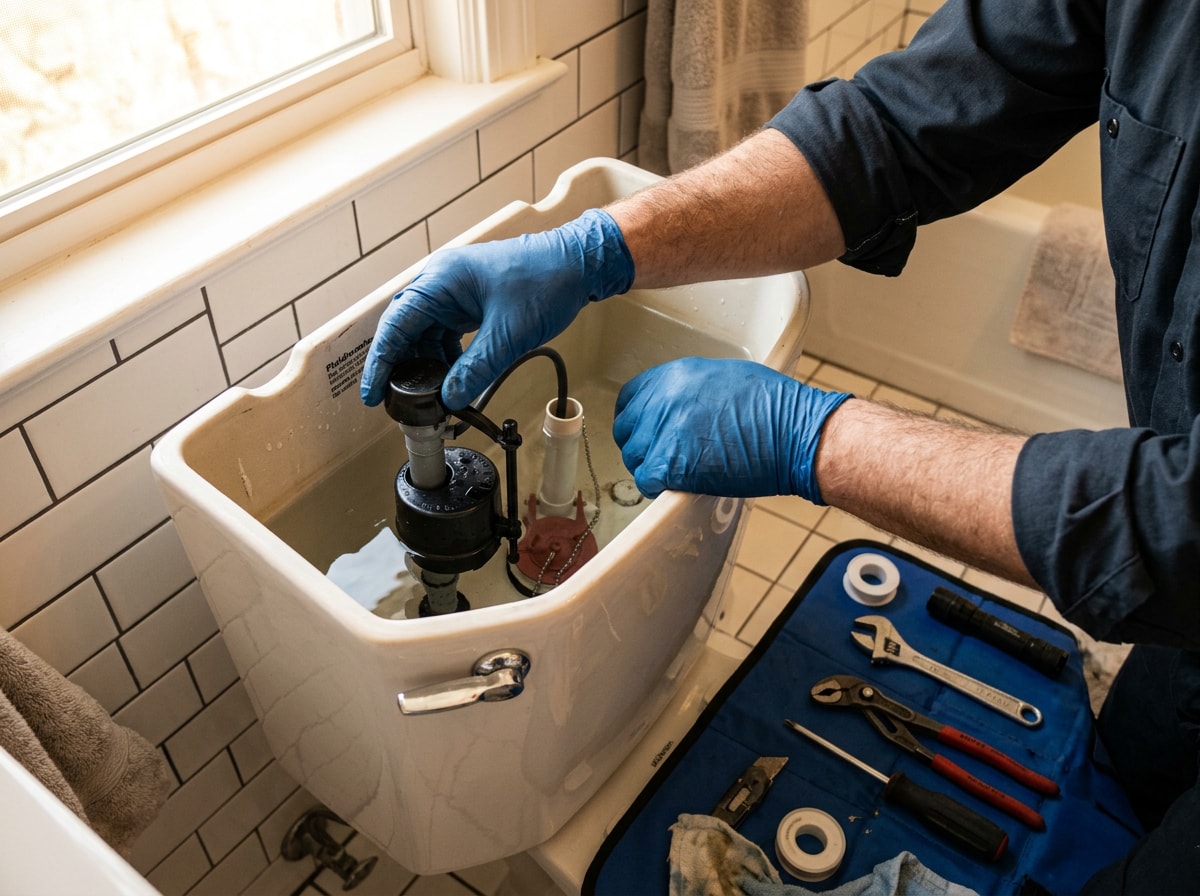
Once the failed part is identified, replacement is typically a single-visit job. The water supply is shut off, the tank is drained, the old part is removed, and a properly sized replacement is installed to match the toilet's existing hardware.
Worn components are a normal wear issue, not a sign of a bigger problem. Rubber flappers harden and crack with age and chlorine exposure, and fill valve washers wear down the same way. Replacing them restores a normal flush cycle and stops the water loss immediately. For a diagnosis and repair, our residential plumbing services team handles this as routine work.
When Repair Isn't Enough: Toilet Installation & Replacement
Repair is the cost-effective move when a toilet is relatively new and the issue is internal, like a bad flapper or fill valve. Replacement makes more sense when the bowl or tank is cracked, the toilet needs constant plunging regardless of what's inside the tank, or it's an old high-flow model that keeps failing no matter what gets fixed.
A standard installation includes checking the closet flange, setting a new wax or foam seal, and leveling the bowl before securing it to the floor. Installation isn't just a matter of bolting the new fixture down; joints must be sealed with an approved elastomeric gasket, flange-to-fixture connection complying with ASME A112.4.3 or an approved setting compound under the plumbing code, which is one reason a loose or improperly sealed toilet eventually starts leaking at the base. Browse our full plumber services if you're weighing repair against replacement for an older bathroom.
FAQ
What causes a constantly running toilet in Chino Valley, AZ?
A constantly running toilet is usually caused by a faulty flapper, a fill valve that won't shut off, or a float set too high. Local groundwater's mineral content speeds up scale buildup on flush valves and flapper seats, which is why these failures tend to repeat here more than in areas with softer water.
Is it better to repair or replace a running toilet?
If the toilet is under ten years old and this is its first repair, fixing it is almost always cheaper. Frequent repeat failures, a cracked tank or bowl, or an old high-flow model usually tip the scale toward replacement.
Can I fix a running toilet myself?
Yes, for simple issues like a tangled chain, a low float, or an obviously worn flapper, these are easy DIY fixes that take under an hour. No, if the problem keeps returning after repeated attempts or if the flush valve seat itself is cracked, which needs a professional repair.
How much does it cost to fix a running toilet?
A simple flapper or chain adjustment typically costs very little in parts if you do it yourself. A professional repair visit usually runs in the low hundreds of dollars depending on which part needs replacing, and full toilet replacement costs more but ends repeat callbacks on an old unit.
Why does my toilet run on and off, or only at night?
Intermittent or nighttime running almost always points to a slow flapper leak rather than a fully stuck fill valve. Water seeps past the flapper slowly enough that the tank doesn't trigger a refill until the level drops noticeably, which often happens hours after the house goes quiet.
Why is my toilet bubbling or gurgling when I flush?
Gurgling or bubbling during a flush is usually a drain-venting issue, not a running toilet problem. It points toward a partial blockage or vent issue further down the line rather than a worn flapper or fill valve, and it's worth a separate inspection.
A running toilet rarely fixes itself, and in a water basin that's been outside safe-yield for decades, every gallon it wastes matters more than it would somewhere else. If a repair hasn't held or you're ready for a permanent fix, get a free estimate from Elsea Plumbing, or visit our homepage to see the full range of services we bring to Chino Valley and the surrounding Yavapai County communities.
Elsea Plumbing INC was founded by Dustin Elsea, a Prescott, AZ native with more than 30 years in the plumbing trade and active Arizona contractor licenses (ROC 232302, ROC 232301). Our crew has repaired running and leaking toilets in Chino Valley homes built on everything from older high-flow fixtures to newer low-flow models, and we see the same hard-water wear patterns on nearly every service call in this basin.