A leaking water heater overflow pipe in Prescott Valley, AZ almost always means the T&P relief valve is responding to pressure, temperature, or sediment buildup inside the tank. It is not a drain, and it is not supposed to run steadily. This guide breaks down why it leaks, how to fix it safely, and exactly where DIY troubleshooting should stop and a licensed plumber should take over.
What Does a Water Heater Overflow Pipe Do?
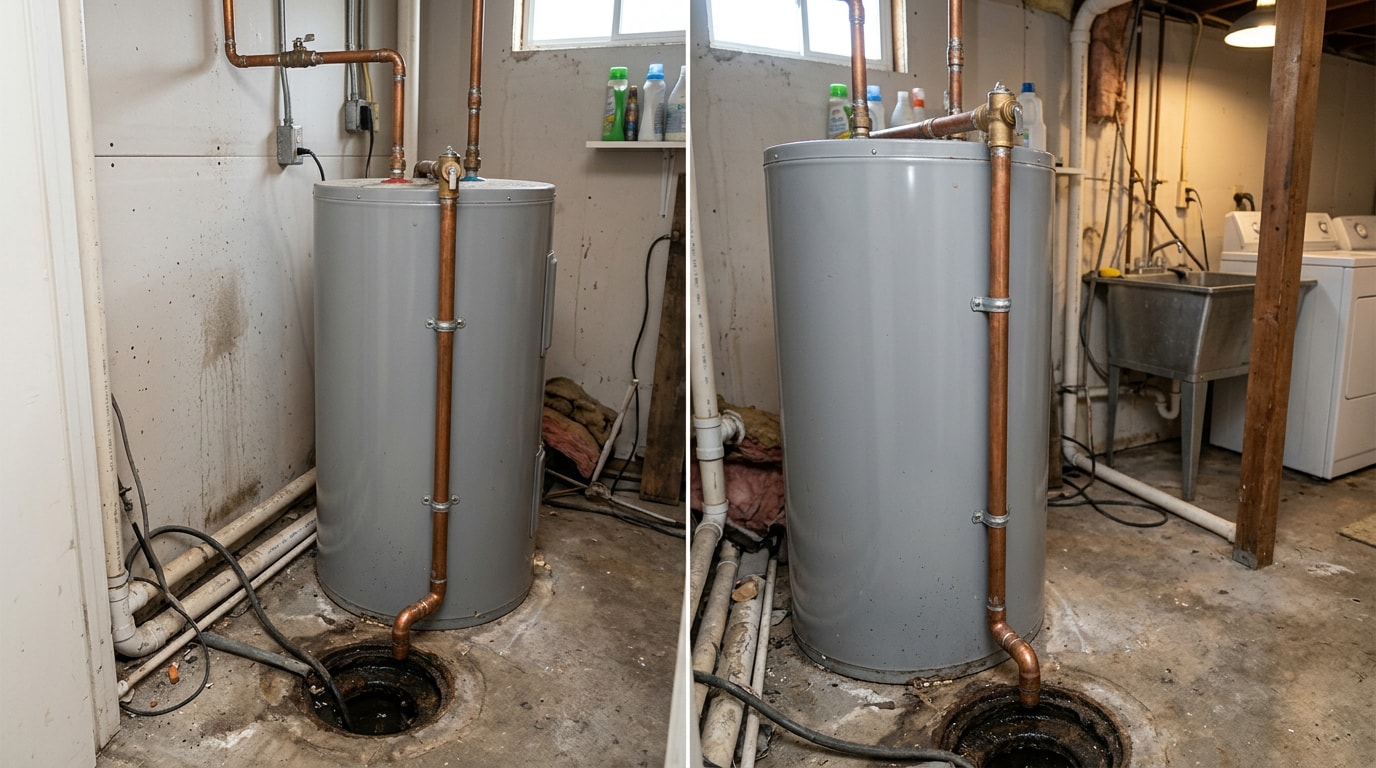
The overflow pipe is the discharge path for your T&P relief valve, the safety device that releases water when temperature or pressure inside the tank climbs past safe limits. Think of it as a pressure-release valve for the whole system, not a plumbing fixture that's supposed to run.
Because it's a safety device, this pipe should never be capped, plugged, reduced in size, or routed somewhere it can't be seen. Doing so defeats the entire purpose of the T&P valve and can turn a minor pressure issue into a serious hazard.
If you're unsure whether your current setup meets code, a licensed plumber serving Prescott Valley can inspect it in a single visit.
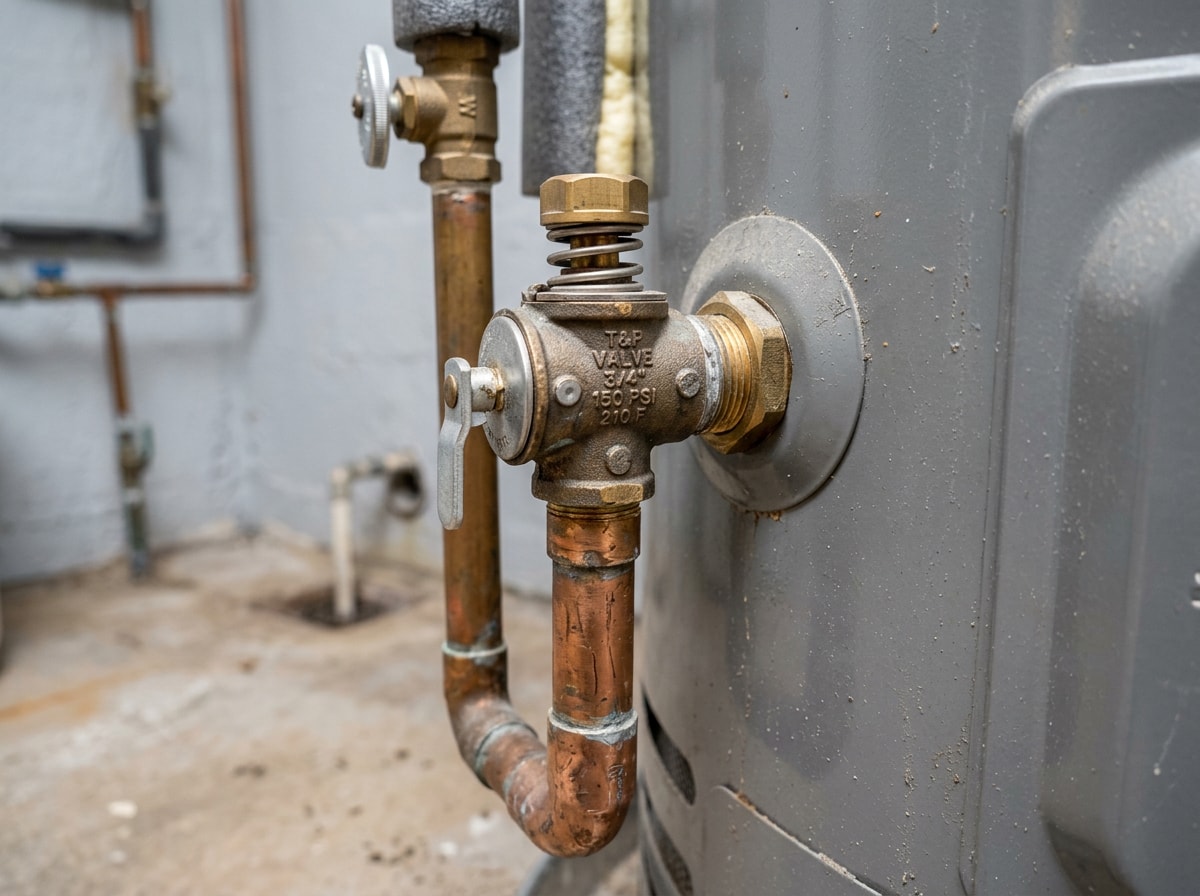
Why Is My Water Heater Overflow Pipe Leaking? Common Causes
Most overflow-pipe drips trace back to one of a few root causes. Here's the order a plumber typically checks them in:
- Excess pressure from thermal expansion
- A thermostat set too high
- Sediment buildup creating hot spots
Excessive Pressure Build-Up in the Tank
When water heats up, it expands. In a closed plumbing system with nowhere for that extra volume to go, pressure climbs until the T&P valve opens to relieve it.
This is often linked to a missing or undersized expansion tank, which absorbs that thermal expansion before it ever reaches the relief valve. Without one, the overflow pipe ends up doing a job it wasn't built to handle regularly.
Water Temperature Set Too High
A thermostat set too high pushes the tank toward overheating and scald risk, and it's one of the fastest ways to trigger the T&P valve unnecessarily.
Setting a water heater to 120°F is a temperature considered safe for most of the population , and it's the balance point most energy guidance points to for both safety and efficiency. Anything meaningfully higher accelerates pressure spikes and raises the odds of scalding at the tap. You can review the Department of Energy's water heating guidance for the full breakdown.
Sediment Build-Up Inside the Tank
Mineral sediment settles at the bottom of the tank and creates hot spots, where the heating element or burner works harder than it should.
That localized overheating can be enough to push the T&P valve open even when overall tank temperature seems normal. Groundwater across much of Arizona tends to run harder than coastal or surface-fed supplies, which is why periodic tank flushing matters, and why some households pair that maintenance with a water treatment service to slow mineral accumulation in the first place.
How to Diagnose a Leaking Overflow Pipe
Before fixing anything, confirm whether the water is coming from the pipe's outlet or from the valve body and threads. The leak source narrows down the likely cause considerably.
Safety Notes Before You Start
Water discharged from this pipe can be scalding hot, since it's venting directly from inside the tank. Keep hands, pets, and anything flammable away from the discharge point while you check it.
Resist the urge to block or cap the pipe even temporarily. A blocked overflow pipe turns a visible drip into a trapped-pressure hazard with no safe outlet.
If you see steady flow rather than an occasional drip, stop troubleshooting and call for help. If you're also noticing water pooling elsewhere in the house, our guide to plumbing leak signs in Prescott Valley covers what else to check.
How to Fix a Leaking Water Heater Overflow Pipe
The right fix depends on what you found during diagnosis. Below is the repair sequence in order, along with which steps are reasonable DIY territory and which call for a licensed plumber.
Turn Off the Power Supply
Shut off power at the breaker for electric units, or close the gas valve for gas-fired water heaters, before touching anything.
This step is safe for most homeowners to handle. It prevents the heating element or burner from firing while you're working near the tank.
Inspect and Test the T&P Valve
Lift the valve's test lever briefly to confirm it opens and closes cleanly, releasing a short burst of water.
If the valve keeps dripping after this test, or won't fully reseat, the valve itself is likely worn and needs replacing rather than adjusting. T&P valve replacement is straightforward for a plumber but carries real risk if done incorrectly, since it means working directly on a pressurized hot water system.
Drain and Flush the Tank to Remove Sediment
Connect a garden hose to the tank's drain valve, route it somewhere safe, and drain several gallons to flush out loose sediment.
Refilling afterward and running a test cycle often resolves overheating-related leaks tied to mineral buildup. This step is generally DIY-friendly, though unusually gritty or discolored drained water may point to heavier sediment than a single flush will clear.
Install an Expansion Tank If Needed
An expansion tank gives thermal expansion somewhere to go besides the T&P valve, reducing wear on the overflow system over time.
Model plumbing code requires a device for controlling pressure wherever a backflow prevention device, check valve, or similar device is installed on a system using storage water heating equipment such that thermal expansion causes an increase in pressure , which describes most homes that already have a pressure regulator or backflow preventer. This is a job best left to a licensed plumber, since it involves sizing the tank correctly and tying into the existing supply line.
Is a Leaking Overflow Pipe an Emergency?
Occasional discharge during a hot cycle is normal. A constant or fast-flowing leak is not, and it usually calls for same-day attention rather than routine troubleshooting.
When It Requires Immediate Professional Help
If water is gushing rather than dripping, or you notice leaking anywhere near electrical connections, shut off the unit's power and water supply and call a plumber right away.
The Consumer Product Safety Commission urges all users to lower their water heaters to 120 degrees Fahrenheit , in part because pressure-relief issues at higher tank temperatures raise the risk of scalding and, in rare cases, tank rupture. You can read the CPSC's tap water scald guidance for the full detail. This is one of the clearest lines between a DIY fix and a situation that needs immediate professional help.
How to Prevent Future Overflow Pipe Leaks
Most overflow pipe leaks are preventable with routine care:
- Flush the tank periodically to keep sediment from accumulating into hot spots.
- Test the T&P valve's function once a year to catch a failing valve early.
- Confirm your expansion tank is still properly charged with air; a waterlogged tank stops absorbing pressure.
- Check that incoming water pressure stays within a safe range; a functioning pressure regulator keeps municipal supply pressure from overloading the tank.
Pairing these checks into an annual inspection, alongside general water heater maintenance and repair, is the most reliable way to keep the overflow pipe dry between service visits. If the tank itself is older or has failed more than once, a full water heater installation may be the more cost-effective long-term fix.
Homeowners throughout Prescott Valley and the surrounding area can reach the team at Elsea Plumbing for an inspection before a small drip turns into a bigger repair. Ready to stop the leak for good? Get a free estimate and have it looked at before the valve wears any further.
FAQ
What Is the Purpose of the Overflow Pipe in a Water Heater?
The overflow pipe carries water safely away from the T&P relief valve whenever internal pressure or temperature exceeds safe limits. It exists purely as a safety outlet, directing discharge somewhere harmless rather than letting pressure build unchecked inside the tank.
How Does Water Pressure Affect Overflow Pipe Leaks?
High incoming water pressure pushes the tank closer to the threshold where the T&P valve opens, even without a temperature issue. If municipal supply pressure runs high, the valve may discharge more often simply trying to keep the system within its rated limits.
Is It Normal for a Water Heater Overflow Valve to Leak?
A small amount of occasional discharge, especially right after heavy hot water use, can be normal. A steady drip or continuous flow is not normal and usually points to a pressure, temperature, or valve problem that needs attention.
Can I Fix the Water Heater Overflow Leak Myself?
Some steps, like testing the valve lever or checking your thermostat setting, are safe for most homeowners to handle. Valve replacement, expansion tank installation, and any leak involving constant flow or electrical components are better left to a licensed plumber to avoid safety risks.
Can I Cap or Plug the Overflow Pipe?
No. Capping or plugging the pipe removes the only safe outlet for the T&P valve. Pressure that can no longer escape stays trapped inside the tank, which raises the risk of a dangerous failure. If the pipe is dripping, fix the cause instead of blocking the discharge.
Where Should the Water Heater Overflow Pipe Discharge?
The pipe should terminate at a visible, safe location, such as above a floor drain or just outside an exterior wall, so a leak is easy to spot. It should never be capped, trapped, or reduced in diameter from the valve's original outlet size.